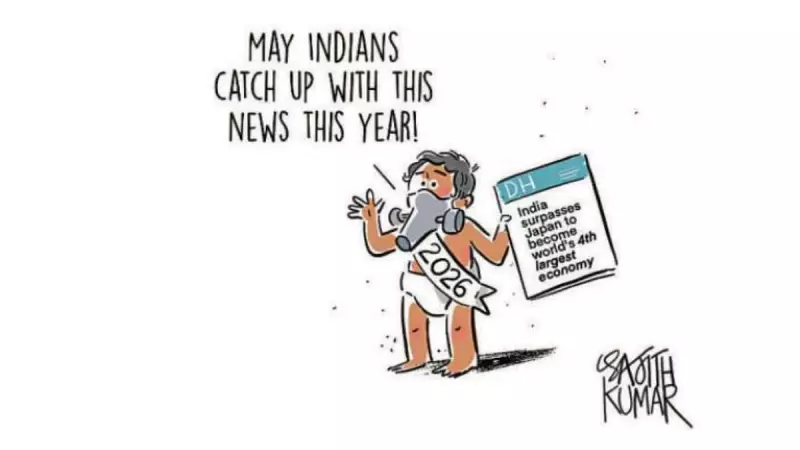
As the calendar turns to 2024, Deccan Herald presents a powerful visual commentary through its latest editorial cartoon titled 'New Year, New Hopes.' This artwork, more than just a humorous sketch, serves as a reflective mirror to the collective aspirations and underlying anxieties of the nation at the dawn of another year. It encapsulates the perennial human spirit of looking forward with optimism, while subtly acknowledging the weight of unresolved issues carried over from the past.
The Visual Narrative of Hope and Challenge
The cartoon, in the classic tradition of editorial satire, uses symbolic imagery to convey its message. Central to the frame is the personification of the New Year 2024, often depicted as a fresh-faced infant, a universal symbol of new beginnings and untapped potential. This figure stands in stark contrast to the backdrop, which likely hints at the lingering shadows of the previous year. The genius of the cartoon lies in this juxtaposition—the pure hope of the 'new' against the complex, often messy reality of the 'ongoing.'
While the specific visual elements are unique to the cartoonist's style, the theme resonates deeply. It speaks to the common Indian citizen's wish list for the coming months: economic stability, social harmony, effective governance, and personal prosperity. The 'hopes' are not presented as naive dreams but as active expectations from the systems and leaders in power. The artwork prompts viewers to consider what tangible changes the new year might truly bring beyond the ceremonial celebrations.
More Than Just a Joke: The Role of Editorial Cartoons
This Deccan Herald toon continues the vital legacy of political and social cartooning in India. These cartoons are not mere filler content on the editorial page; they are a form of journalism. They distill complex national and global issues into an immediately accessible format, challenging authority, questioning policies, and giving voice to public sentiment with a single, potent image. The 'New Year, New Hopes' cartoon operates on this very principle. It acts as a catalyst for conversation, encouraging readers to pause and reflect on their own hopes for the country's future in areas like inflation, employment, education, and healthcare.
The timing of its publication is also significant. Released around the New Year, it taps into a moment of collective introspection. People are naturally inclined to make resolutions and wish for better outcomes. The cartoon harnesses this mood to steer public discourse toward civic responsibility and accountability. It reminds the audience that the promise of a new year is a shared responsibility between the people and their representatives.
The Enduring Impact of a Single Frame
In an era dominated by digital noise and lengthy opinion pieces, the efficiency of a well-crafted cartoon is unparalleled. Deccan Herald's offering for 2024 succeeds in packing a multifaceted message into one frame. It acknowledges the universal optimism of a fresh start while gently prodding the conscience of the nation to address continuing challenges. The cartoon concludes not with a definitive answer, but with an open-ended question to its audience: What will we, as a society, do to nurture these 'new hopes' and ensure they are not dashed by the end of 2024?
Ultimately, 'DH Toon: New Year, New Hopes' stands as a relevant piece of cultural commentary. It is a testament to the power of visual satire in journalism, capturing the bittersweet essence of transitioning into a new year—carrying forward the lessons of the past while mustering the courage to hope for a brighter, more equitable future for all Indians.