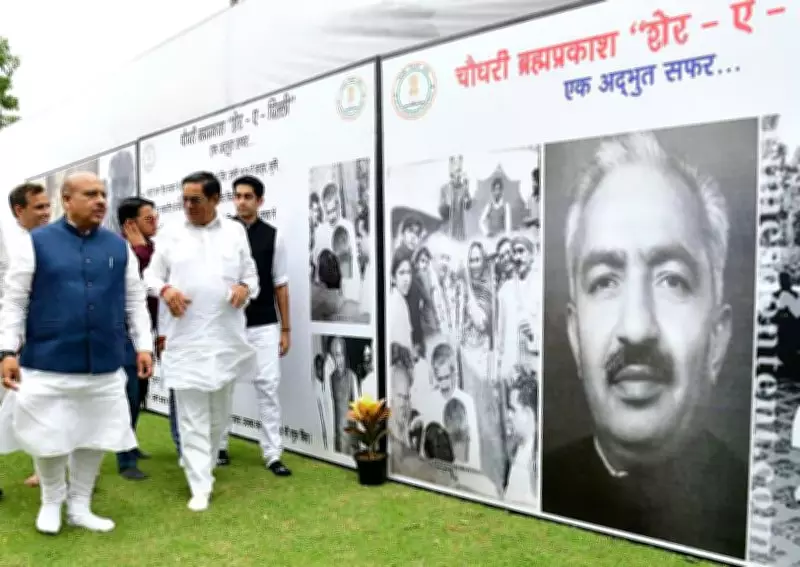
The Delhi Legislative Assembly paid tribute to the city's first Chief Minister, Chaudhary Brahm Prakash, on his 108th birth anniversary on Monday. Assembly Speaker Vijender Gupta led the commemorative programme at the Vidhan Sabha premises, offering floral tributes to the veteran freedom fighter and statesman.
Speaker Highlights Brahm Prakash's Contributions
Speaking at the event, Gupta remarked that the story of modern Delhi cannot be written without acknowledging the extraordinary contribution of Chaudhary Brahm Prakash, whose vision, commitment, and leadership shaped the city's democratic and developmental journey. He recalled that Brahm Prakash joined the freedom struggle at a young age, participating in the movement against British rule without seeking political office, personal recognition, or material gain. According to Gupta, the future Chief Minister and Member of Parliament entered public life solely to contribute to India's freedom, displaying exceptional courage, conviction, and determination during the colonial era.
Post-Independence Service and Values
Gupta emphasized that after Independence, Brahm Prakash remained firmly committed to the development of Delhi, the welfare of farmers, and the resolution of important national issues while leading a simple, disciplined, and principled life. Even while holding positions of authority and responsibility, the former Chief Minister never abandoned the values, ideals, and struggles that had defined his role in the freedom movement.

Role During Emergency
Remembering his role during the Emergency, Gupta noted that Brahm Prakash spent 19 months in prison and endured considerable hardships. This imprisonment reflected the leader's lifelong commitment to democracy, civil liberties, constitutional values, and public service.
Statue and Legacy
Referring to the statue of Brahm Prakash installed in the Delhi Assembly complex, Gupta said it symbolizes the respect and admiration he earned through decades of dedicated public service. He also recalled that former Prime Minister Atal Bihari Vajpayee, then Leader of the Opposition, had visited the Assembly to pay floral tributes and formally inaugurate the statue.
Describing Brahm Prakash as a symbol of courage, integrity, and democratic values, Gupta said his life and work continue to inspire public representatives and citizens alike. He urged people to draw inspiration from the late leader's commitment to public welfare, democratic principles, and selfless service to the nation.