

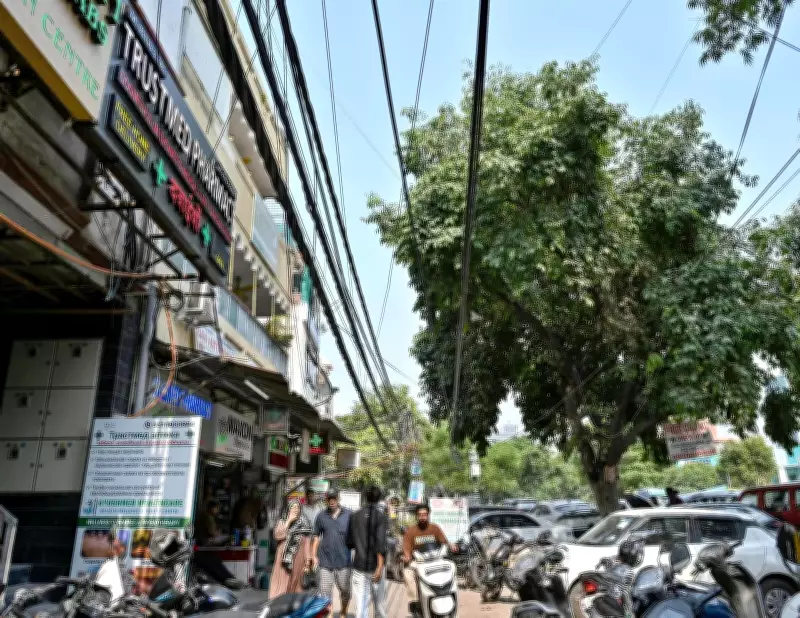
A devastating fire at a hotel in New Delhi on Wednesday claimed 21 lives, and a subsequent investigation by The Times of India has revealed that the tragedy was far from an isolated incident. The neighbourhood is packed with dozens of budget hotels, guest houses, and hostels operating from similar multi-storeyed buildings crammed into narrow lanes. Many share the same hazardous layout: cramped interiors, a single entry and exit point, lift shafts running through the structure, and limited or no ventilation.
Immediate Aftermath and Evacuations
As news of the tragedy spread, several establishments in the vicinity quickly shut their doors, removed their signboards, and evacuated guests. Another hotel owned by the same proprietor as the gutted hotel was also hurriedly emptied. Karllambert, a visitor from the Philippines, recounted his experience: "My wife and I came to India because our seven-month-old son is undergoing a liver transplant at Max Hospital. We were staying at a nearby hotel, paying Rs 2,000 per night for a small, cramped room with no windows. This morning, the staff woke us up and asked us to leave immediately."
Root Cause: Proximity to Max Hospital
Locals attribute the proliferation of hotels to the area's proximity to Max Hospital, which attracts patients from across India and abroad. Nightly room rates range from Rs 1,000 to Rs 5,000, making these hotels a popular option for families seeking accommodation during medical treatment. However, long-time residents say the neighbourhood's infrastructure has struggled to keep pace with the growing number of hotels and visitors.

Cramped and Unsafe Conditions
A peek inside one hotel that removed its signboard and closed immediately after the tragedy revealed how cramped these establishments are. A lift stood next to the staircase, while the remaining space was so limited there was hardly any room for a reception or seating area. "While a residential building in the colony would have a maximum of two rooms on a floor, hotels have squeezed in four rooms in the same space. They regularly host families and tourists, so the buildings are rarely empty. On weekends, a single floor easily has 8-10 guests," said Preet, a resident.
With as many as four rooms on each floor, locals estimate that a single building could house 80-100 tourists at a time. They say evacuation during emergencies is nearly impossible in such conditions. The design of several hotels follows a similar pattern: one five-storey residential building had virtually no ventilation, with its facade entirely covered in glass, resembling a shopping complex and leaving little scope for natural airflow.
Lack of Fire Safety Infrastructure
Residents also pointed to the absence of fire safety infrastructure. "You hardly see fire hoses or other equipment installed in these buildings," said a resident. A common feature is the placement of kitchens in basements. "Most owners want to maximise the number of guest rooms on the upper floors to increase earnings, so kitchens are often pushed into the basement," said Vishal, another resident.
Infrastructure Issues Compounded
Three years ago, a portion of a nearby park was removed to create a wider access road, but residents say the stretch is now used for parking. "It was converted into a road to provide easier access for ambulances, fire tenders, and emergency vehicles. But over the years, as hotels came up, cabs and private vehicles began occupying the area, defeating its very purpose. At the time of the fire, this road was blocked. Fire tenders faced delays, and ambulances struggled to get through," said Vijay, a resident.






