

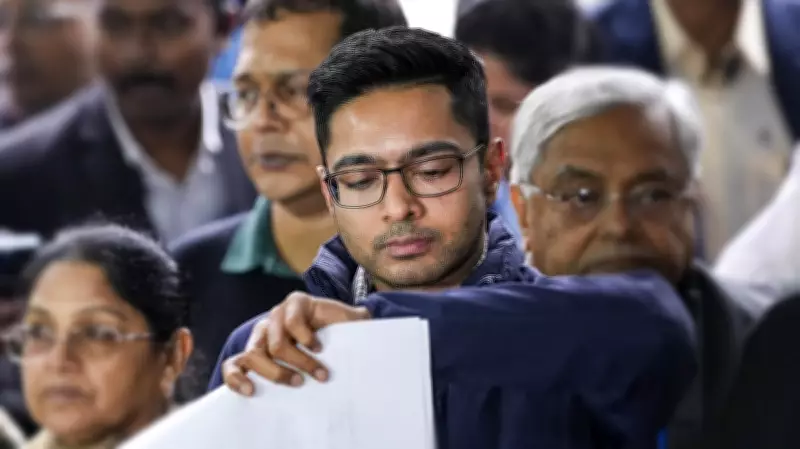
Delimitation Bill Defeat Exposes BJP's Discomfort, Says TMC's Abhishek Banerjee
In a significant political development, Trinamool Congress (TMC) leader Abhishek Banerjee has asserted that the recent defeat of the delimitation bill in Parliament has laid bare the Bharatiya Janata Party's (BJP) underlying discomfort and political challenges. This legislative setback, according to Banerjee, highlights the ruling party's struggles in navigating parliamentary dynamics and underscores growing opposition unity.
Political Implications of the Bill's Failure
The delimitation bill, which aimed to redraw electoral constituencies, was defeated in a parliamentary vote, marking a notable blow to the BJP's legislative agenda. Abhishek Banerjee, a prominent figure in the TMC and a key opposition voice, emphasized that this outcome is not merely a procedural defeat but a reflection of deeper political fissures. He argued that the BJP's inability to secure passage for the bill exposes its discomfort with evolving political realities and its diminishing control over parliamentary proceedings.
Banerjee further elaborated that the defeat signals a robust challenge to the BJP's governance narrative, suggesting that opposition parties are increasingly coalescing to counter the ruling party's policies. This event, he noted, could have far-reaching consequences for future legislative battles and the overall political landscape in India.

Analysis of BJP's Parliamentary Strategy
The failure of the delimitation bill raises questions about the BJP's parliamentary strategy and its ability to muster support for contentious legislation. Banerjee pointed out that the ruling party often relies on its majority to push through bills, but this defeat indicates potential cracks in its approach. He highlighted that the opposition's successful blocking of the bill demonstrates effective coordination and a shared resolve to hold the government accountable.
Moreover, Banerjee suggested that the BJP's discomfort stems from broader issues, such as public dissent and internal party dynamics, which may be influencing its legislative performance. This incident, he argued, serves as a wake-up call for the ruling party to reassess its political tactics and engage more constructively with opposition stakeholders.
Broader Context and Future Outlook
The delimitation bill's defeat occurs against a backdrop of intense political rivalry and upcoming electoral contests. Abhishek Banerjee's comments underscore the TMC's role as a vocal critic of the BJP, positioning the party as a key player in national opposition politics. He warned that if the BJP continues to face such setbacks, it could impact its electoral prospects and governance credibility.
Looking ahead, Banerjee called for greater transparency and dialogue in parliamentary processes, urging the BJP to address the concerns raised by opposition parties. He emphasized that healthy democratic debates are essential for India's political stability and that the delimitation bill episode should prompt a reevaluation of legislative priorities.
In conclusion, the defeat of the delimitation bill, as highlighted by Abhishek Banerjee, not only exposes the BJP's political discomfort but also signals a shifting dynamic in Indian politics. This development reinforces the importance of opposition unity and could shape future parliamentary engagements, making it a critical moment for both the ruling party and its adversaries.






