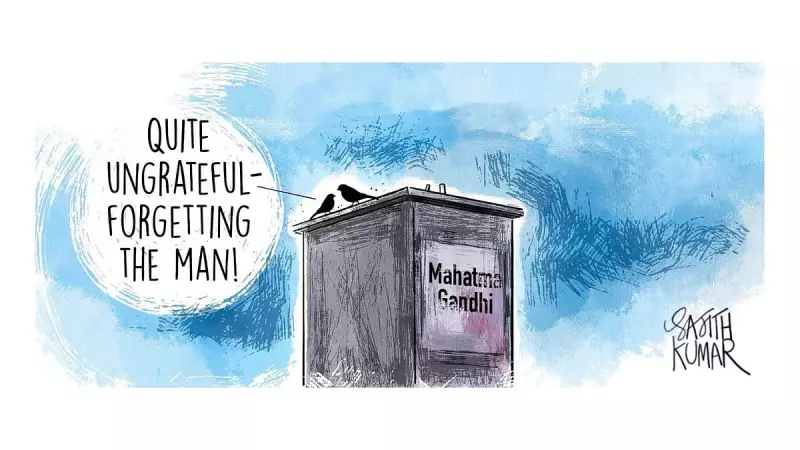
In its latest edition, the renowned Deccan Herald newspaper has published a pointed editorial cartoon titled "DH Toon: Forgetting The Man". This piece of visual commentary serves as a powerful critique of a recurring theme in the nation's political landscape. The cartoon, using the medium's classic blend of imagery and minimal text, highlights the phenomenon of collective amnesia or selective remembrance that often surrounds significant political figures and their contributions once they are no longer at the centre of power.
The Art of Political Satire in Editorial Cartoons
Editorial cartoons have long been a cornerstone of Indian journalism, offering a succinct, often humorous, and always sharp perspective on current affairs. The "DH Toon" series by Deccan Herald is a prominent example of this tradition. These cartoons distill complex political and social narratives into a single, impactful frame. The specific cartoon in question taps into the public discourse about how historical narratives are shaped and how certain figures are elevated or sidelined in popular memory based on contemporary political convenience.
The genius of such cartoons lies in their ability to communicate a volumes-worth of critique without a lengthy editorial. They rely on symbolism, caricature, and context that the informed reader can immediately grasp. In "Forgetting The Man", the artist likely employs familiar visual metaphors to question the integrity of the political narrative. It prompts the audience to reflect on who gets remembered, who gets forgotten, and the forces that dictate this selective process in the annals of public memory.

Context and Interpretation of the Cartoon's Message
While the specific visual details are described in the original source, the overarching theme is clear. The cartoon critiques the tendency to airbrush history or to allow the legacy of individuals to fade based on the prevailing political winds. This is not an isolated incident but a broader commentary on political culture. It raises questions about institutional memory, the role of media in preservation, and the citizen's duty to remember.
The "man" in the title could be interpreted as a generic placeholder for any leader or influential figure whose work is at risk of being overlooked. The satire suggests that this forgetting is not always accidental but sometimes a deliberate act of omission. This resonates in a democracy where evaluating the past is crucial for making informed choices about the future. The cartoon acts as a mirror, showing society a potentially uncomfortable truth about its own short attention span and the cyclical nature of political hero worship and subsequent neglect.
The Role and Impact of Editorial Cartoons in Democracy
Publications like Deccan Herald leverage cartoons as a vital tool for democratic engagement. In an era of information overload, a well-crafted cartoon can cut through the noise and capture the essence of an issue. The "DH Toon" series, including this particular installment, contributes to holding power to account by using satire as a weapon. It challenges the official narrative and encourages critical thinking among the readership.
The consequences of "forgetting" are significant. It can lead to the repetition of past mistakes, the loss of valuable lessons, and the distortion of a nation's journey. By highlighting this issue, the cartoon performs a civic function. It is not merely entertainment but a form of journalism that underscores the importance of historical consciousness. The cartoonist, in this case, becomes a chronicler and a critic, using ink and wit to ensure that important conversations about memory and legacy remain part of the public domain.
In conclusion, Deccan Herald's "DH Toon: Forgetting The Man" is more than just a daily cartoon; it is a snapshot of a critical societal debate. It embodies the power of the press to question, provoke, and remind. As with all effective satire, its value lies in its ability to make readers pause, think, and perhaps, remember a little more diligently. In doing so, it reinforces the indispensable role of a free press and artistic expression in a healthy, vibrant democracy like India's.