

Digvijaya Singh Advocates for Jagdambika Pal as Lok Sabha Speaker
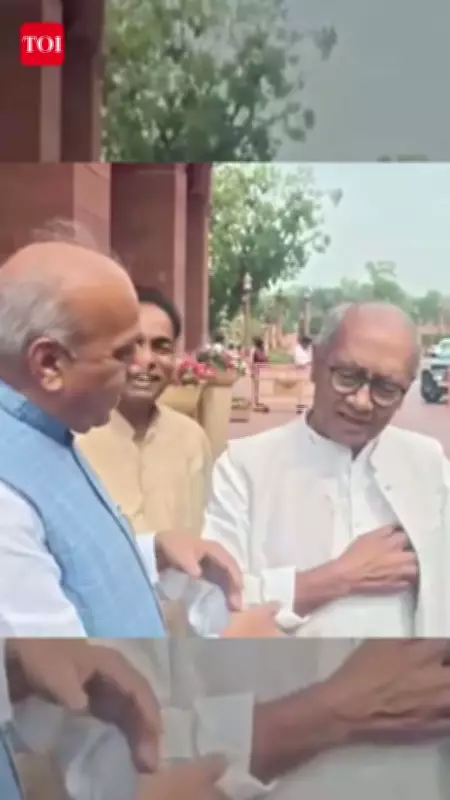
In a surprising and candid moment captured outside Parliament, senior Congress leader Digvijaya Singh publicly suggested that Bharatiya Janata Party MP Jagdambika Pal should be appointed as the Lok Sabha Speaker, replacing the current incumbent Om Birla. This exchange occurred during the ongoing Budget Session, highlighting the informal yet significant interactions between political figures.
Singh's Praise for Pal's Fair Conduct
Digvijaya Singh, a Rajya Sabha MP, was seen on camera greeting Jagdambika Pal and commending him for what he described as the 'fair conduct' of Lok Sabha proceedings. Singh explicitly stated, "You will be a better speaker than..." and added, "Birla ji should leave, and he should replace him." This endorsement underscores Singh's appreciation for Pal's parliamentary demeanor, despite their differing party affiliations.
Recalling Shared History and Philosophical Reflections
During their conversation, Singh reflected on their past association, noting, "We have been together. There are ups and downs." He further enriched the dialogue by reciting a famous couplet from Kabir: "Kabira khada bazaar mein, maange sabki khair, Na kaahu se dosti, na kaahu se bair," which translates to "Kabir stands in the marketplace, wishing well for all, neither friendship nor enmity with anyone." This poetic reference added a philosophical layer to the discussion, emphasizing neutrality and goodwill in political discourse.

Implications for Lok Sabha Leadership
This incident brings attention to the dynamics of Lok Sabha leadership and the potential for cross-party support in parliamentary roles. While Om Birla continues to serve as Speaker, Singh's remarks suggest a desire for change based on perceived fairness and effectiveness. The Budget Session has been a platform for such exchanges, reflecting the broader political climate in India.
As the session progresses, such moments may influence discussions on parliamentary decorum and leadership appointments, highlighting the ongoing interplay between tradition and potential shifts in governance.






