DMK to Pursue Constitutional Amendment to End Governor's Address Tradition
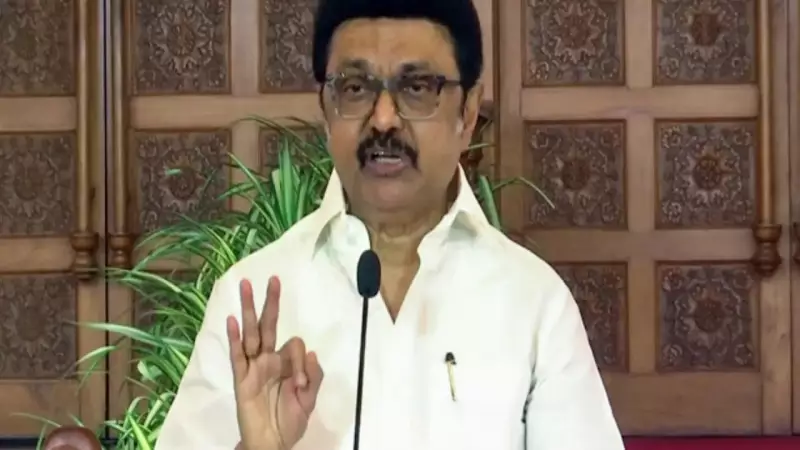
Tamil Nadu Chief Minister MK Stalin declared on Thursday that his party, the Dravida Munnetra Kazhagam (DMK), will initiate consultations with like-minded opposition parties across India to move a constitutional amendment aimed at abolishing the practice of the Governor's address at the commencement of the first Assembly session each year.
Pattern of Confrontations in Opposition-Ruled States
This significant announcement follows a series of escalating confrontations in several Opposition-ruled states, where Governors have repeatedly refused to read state government-approved speeches during Assembly sessions. In a pointed post on social media platform X, Stalin accused Governors of behaving like "party agents" and deliberately undermining duly elected state governments.
"First Tamil Nadu. Then Kerala. Now Karnataka. The pattern is clear and deliberate," Stalin wrote. He emphasized that the only viable solution now is to end the longstanding tradition of beginning the first annual Assembly session with the Governor's address.

Stalin asserted, "DMK will consult like-minded opposition parties across India and pursue a constitutional amendment in the very next parliamentary session to abolish this obsolete and irrelevant practice."
Recent Incidents Fueling the Controversy
The Chief Minister's remarks come just two days after Tamil Nadu Governor RN Ravi walked out of the Assembly before delivering his inaugural address. Governor Ravi cited alleged disrespect to the national anthem and claimed his microphone was switched off. This incident sparked sharp exchanges within the House, with Speaker M Appavu urging the Governor to adhere to established Assembly conventions.
Raj Bhavan later issued a statement defending the walkout, alleging that critical issues such as atrocities against Dalits and sexual violence against Dalit women were omitted from the government's prepared speech. Concurrently, Opposition AIADMK leaders staged their own walkout, protesting law and order issues in the state.
Karnataka Governor's Walkout Triggers Constitutional Debate
A similar standoff unfolded in Karnataka on the same day, when Governor Thawarchand Gehlot delivered merely two lines of his customary address before walking out of the joint sitting of the Assembly and Council. He refused to read the full Cabinet-approved speech, an action that triggered chaos in the House with Congress members raising slogans and accusing the Governor of violating constitutional norms.
Karnataka Chief Minister Siddaramaiah condemned the Governor's conduct, stating it amounted to a breach of the Constitution. He revealed that the state government is actively considering legal options in response. Siddaramaiah explained that the Cabinet-prepared address included objections to the Union government's decision to replace the Mahatma Gandhi National Rural Employment Guarantee Act (MGNREGA) with the Viksit Bharat–Rozgar aur Ajeevika Mission (Rural), a move his government strongly opposes.
In a detailed statement on X, Siddaramaiah said, "By not reading the address prepared by the Cabinet at the first joint session of the year, the Hon’ble Governor of Karnataka has violated the Constitution. This act amounts to an affront to the House of elected representatives."
He further elaborated that under Articles 176 and 163 of the Constitution, the Governor is bound to read the address prepared by the Council of Ministers and possesses no authority to substitute it with a speech of his own. The Karnataka CM linked this confrontation to substantive policy differences, particularly concerning rural employment, arguing that the new law dilutes guaranteed employment, removes decentralized decision-making powers of gram sabhas and panchayats, and disproportionately affects women, Dalits, workers, and small farmers.
Kerala Governor's Drastically Curtailed Address
In Kerala, Governor Arif Mohammed Khan delivered what became the shortest policy address in the state Assembly's history during the Budget session. His speech lasted just one minute and eighteen seconds, with the Governor reading only the first line and the concluding paragraph of the original 62-page document.

While this action technically fulfilled his constitutional obligation, it raised serious questions about whether differences with the elected government should extend to the Assembly, which represents the will of the entire state. The entire proceeding, including the national anthem, concluded in under five minutes before the Governor departed the House.
Wider Constitutional Implications and Expert Warnings
These back-to-back confrontations have reignited a broader debate on the limits of administrative discretion and the role of Governors in India's federal structure. Constitutional experts have issued warnings, noting that refusing to deliver a Cabinet-approved address could invite judicial scrutiny. They observe that while Governors may express reservations privately, the Constitution explicitly mandates that the address be delivered to the House in its entirety as prepared by the elected government.
The collective actions in Tamil Nadu, Karnataka, and Kerala underscore a growing tension between state governments and gubernatorial offices, prompting calls for systemic reform. DMK's proposed constitutional amendment initiative marks a significant political move to address what many perceive as an archaic practice increasingly prone to partisan misuse.