

DMK Ramps Up Christian Engagement in Tamil Nadu Amid Election Season
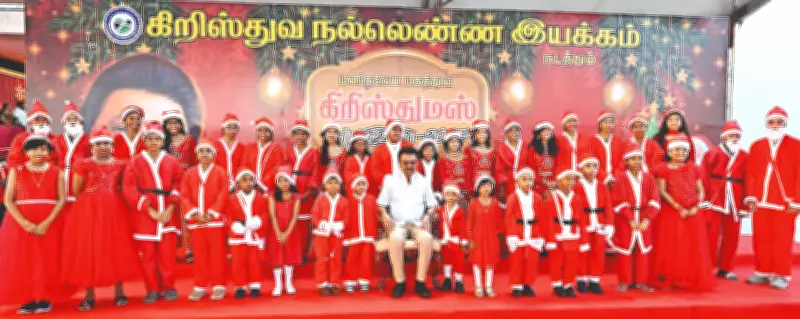
Chief Minister M K Stalin emphasized the alignment of his Dravidian model government with the teachings of Jesus Christ, stating that "everything should be available to everyone" during Christmas celebrations in Tirunelveli. This declaration marks a strategic push by the DMK to solidify support within the Christian community as Tamil Nadu gears up for upcoming elections.
Policy Shifts and Electoral Maneuvers
In December, Stalin announced a significant 'Christmas gift' to Christian institutions by amending a government order. This change grants minority-run educational institutions greater autonomy over faculty appointments, a move that directly addresses long-standing grievances. Additionally, the state government has withdrawn appeals in the Supreme Court challenging a high court order that exempted teachers in minority schools from the Teacher Eligibility Test. This decision benefits 1,439 existing teachers and facilitates 470 new appointments.
Further demonstrating its commitment, the DMK-led administration allocated lands for 12 cemeteries across districts including Theni, Tiruvallur, and Ramanathapuram in November. The party has also nominated two Christians, J Constandine Ravindran and M Christopher Tilak, to the Rajya Sabha through its alliance with Congress, highlighting its inclusive approach.

Countering the TVK Challenge
The DMK's outreach comes amid perceptions that support for the traditional DMK–Congress alliance is fragmenting, with actor Joseph Vijay's Tamilaga Vettri Kazhagam (TVK) emerging as a new attraction. Stalin has intensified his campaign by frequently visiting coastal districts like Kanyakumari over the past six months, meeting local bishops and Christian organization representatives to counter TVK's influence.
Interestingly, Vijay is likely to contest from the minority-dominated Trichy East assembly seat, adding pressure on the DMK. S Inigo Irudayaraj, a DMK MLA and founder-president of the Christian Goodwill Movement, acknowledges a "disturbance" within the community but questions Vijay's commitment, noting, "He does not speak for the community when the brethren are targeted elsewhere."
Community Sentiments and Political Calculations
Christians, who constitute 6% of Tamil Nadu's population, have historically backed secular parties. However, the emergence of BJP and Jayalalithaa's anti-conversion law has consolidated this vote base. Key demographics include Dalits in the north, Nadars in the south, Vellalars of Trichy and Palayamkottai, and the fishermen communities of Kanyakumari and Tuticorin.
D Johnson, a 65-year-old resident of Velachery, reflects the community's peace under DMK rule, stating, "We have had complete freedom in worship and prayer meetings in the past years. It will reflect in our voting." Conversely, younger supporters like J Timothy, a 33-year-old marketing executive, express newfound political awareness through TVK, though he clarifies, "I won’t vote for Vijay if he aligns with NDA."
Institutional Recognition and Future Prospects
DMK's efforts have garnered institutional praise. Stalin recently issued certificates of permanent minority status to 88 educational institutions and was felicitated by the All-India Association for Christian Higher Education, representing 500 colleges. Representatives from prominent institutions such as Stella Maris and Loyola participated, lauding government schemes like Tamil Pudhalvan and Kalaignar Mahalir Urimai Thittam.
Paul Wilson, principal of Madras Christian College, highlighted how the amended government order addresses challenges in exercising constitutional minority rights, particularly in appointment committees. "The chief minister was careful to see that it is implemented through adoption in the syndicate," he noted.
As the election nears, all eyes are on the influential Tamil Nadu Bishop Council, set to announce its support this month. With both DMK and TVK vying for Christian votes, the community's decision could significantly impact the political landscape, testing the alliance's traditional voter arithmetic against new poles of attraction.






