EC Issues Notices to Voters with Over 6 Siblings in Bengal SIR Exercise
The Election Commission of India has taken a significant step in its ongoing Special Intensive Revision of electoral rolls. For the first time, the commission has started issuing centrally-generated notices to voters flagged by its software for having more than six siblings listed under the same parent.
How the Notice System Works
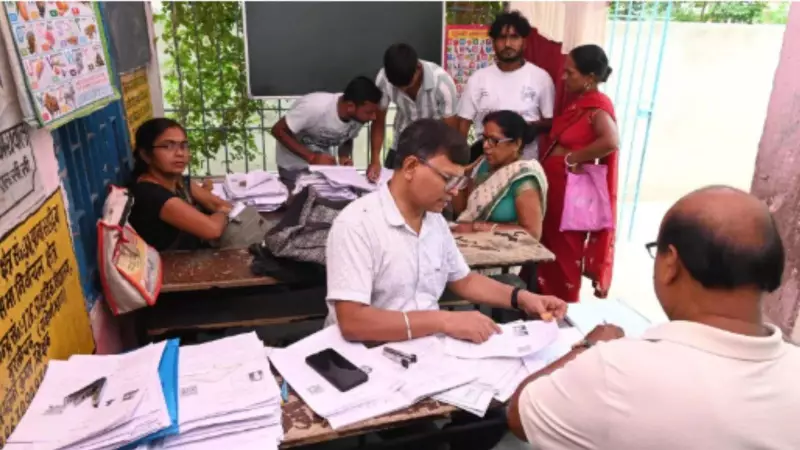
The Election Commission generates these notices through its centralized portal. Officials send them to local authorities' login accounts. From there, grassroots functionaries known as Booth Level Officers receive the notices for distribution to individual voters.
Official sources familiar with the development confirm this new approach. West Bengal, where the SIR exercise is currently active, has already seen these notices in circulation. The notices come pre-filled with voter details and specific reasons for issuance.

Each notice carries the stamp and signature of the Assistant Electoral Registration Officer. According to election laws, only the Electoral Registration Officer or Assistant Electoral Registration Officer of an Assembly constituency holds the authority to issue such notices and call for hearings when doubts arise about a voter's eligibility.
Content of the Notices
The notices, written in Bangla, inform recipients about the ongoing Special Intensive Revision in their constituency. They acknowledge receipt of enumeration forms while raising specific concerns.
"You have been added as the son or daughter of someone whom six others have claimed as their father," the notice states clearly. "This creates suspicion of a possible wrong connection."
The notice then directs voters to attend a hearing at a designated location and time. It requires them to bring supporting documents from a list of thirteen options provided by the Election Commission.
Nationwide Implementation
Similar notices are either being generated or will soon appear in other states and union territories undergoing the SIR exercise. The complete list includes:
- Uttar Pradesh
- Rajasthan
- Goa
- Lakshadweep
- Puducherry
- Gujarat
- Tamil Nadu
- Madhya Pradesh
- Chhattisgarh
- Andaman & Nicobar Islands
- Kerala
This marks the first instance of such specific notices being generated nationwide. During the SIR exercise in Bihar, which began in June 2025, notices focused primarily on incomplete or deficient documentation accompanying enumeration forms.
Background of the SIR Exercise
The Election Commission issued instructions for the Special Intensive Revision in October 2025. All registered voters in the nine states and three union territories needed to submit enumeration forms. These forms required details about themselves and their parents or relatives registered during the last intensive revision in the early 2000s.
When voters could not be matched with earlier electoral rolls, the commission issued notices requesting documentation to establish eligibility. In West Bengal specifically, the last intensive revision occurred in 2002.
The Election Commission published West Bengal's draft electoral roll on December 16. This draft removed 58 lakh names that Booth Level Officers had marked as deceased, shifted, absent, or enrolled in multiple locations.
West Bengal Chief Electoral Officer Manoj Agarwal revealed that another 1.67 crore voters remained under scrutiny. The commission's centralized software flagged these voters for logical discrepancies in their forms. Among them, 23.64 lakh voters listed fathers with six or more children.
Political Reactions
Dr Shashi Panja, a minister in the West Bengal government and Trinamool Congress spokesperson, criticized the notice system. She alleged voter harassment through these notices.
"It personally attacks voters by questioning why they have six brothers and sisters," Panja stated firmly. "This approach seems unconstitutional and fundamentally wrong."
The Bharatiya Janata Party presented different concerns in its memorandum to the Election Commission on November 26. The party warned about potential fraudulent linkage practices in electoral rolls.

BJP representatives alleged that illegal Bangladeshi immigrants might obtain fraudulent documents through local networks. They claimed political operatives and ruling establishment workers pressured Booth Level Officers to avoid deleting ineligible names.
"Instances have surfaced where dead or shifted voters appear falsely as parents or relatives of new applicants," the BJP memorandum noted. "This highlights organized efforts to manipulate electoral rolls."
When asked about BJP's allegations, Dr Panja demanded concrete data from the Election Commission. "The commission should clarify how many Bangladeshis and Rohingya they have identified through the SIR exercise," she responded. "We want to see actual numbers, not generalizations that cannot be substantiated."
Timeline and Legal Challenges
The Election Commission has established a clear timeline for the notice and hearing process. This period runs from December 16, 2025, to February 7, 2026. The final electoral roll publication will follow on February 14, 2026.
On June 24 last year, the commission ordered the Special Intensive Revision, beginning with Bihar where assembly elections were due. In October, officials announced the SIR schedule for twelve states and union territories, with plans to expand nationwide gradually.
The Special Intensive Revision differs significantly from the usual Special Summary Revision conducted annually before elections. While the SSR only adds newly eligible voters and removes those who died or shifted, the SIR involves preparing fresh electoral rolls from scratch.
The last intensive revision occurred in the early 2000s. The current SIR adopts a different process requiring registered voters to submit enumeration forms and supporting documents to prove eligibility.
Multiple petitions have challenged the Election Commission's June 24, 2025 order in the Supreme Court, adding another layer to this complex electoral exercise.