Election Commission Orders Sweeping Police Transfers in West Bengal
The Election Commission of India has mandated another extensive round of senior police officer transfers in West Bengal, moving a total of 12 superintendents, four commissioners, and additional director-generals overseeing north and south Bengal. This action has sparked sharp criticism from Chief Minister Mamata Banerjee, who alleges that the poll panel is covertly assisting the Bharatiya Janata Party in influencing the electoral process.
Mamata Banerjee Accuses EC of Political Manipulation
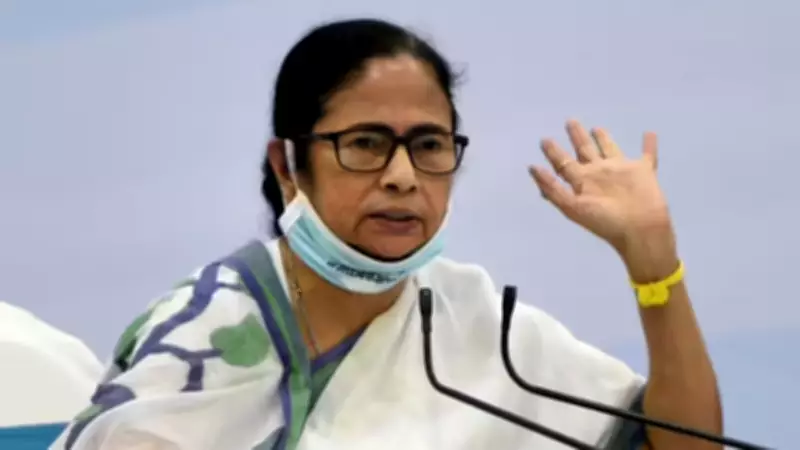
Chief Minister Mamata Banerjee has vehemently condemned the transfers, labeling them as a strategic move to facilitate the distribution of cash and arms by the BJP ahead of elections. "I will tell BJP's commission that they are playing a brilliant game. Even before the issuance of election notification, they have removed key officials - from DGP to SPs, from chief secretary to police commissioner," Banerjee stated. She expressed concern over the removal of experienced officers, questioning the potential consequences in the event of a disaster or law and order breakdown.
Banerjee warned, "The chief secretary, CP and others who are experienced and understand the ground situation have been removed. If there is any breakdown in law and order, the commission will be responsible... Is there an intention to incite unrest? Is there any plan to trigger something before Eid?" She further accused the Election Commission of acting under BJP instructions, describing the situation as "Tughlaqi Raj" and asserting that such overnight changes would not yield electoral gains for the BJP.

Details of the Police Officer Transfers
The recent transfers follow earlier actions by the Election Commission, including the removal of Nandini Chakravorty and JP Meena from the positions of chief secretary and home secretary, respectively, late on Sunday. On Monday morning, a reshuffle among higher police officials was effected, which included the removal of Peeyush Pandey as director-general of police and Supratim Sarkar as Kolkata Police commissioner.
Within 24 hours, another overhaul was implemented. Key changes include:
- Indira Mukherjee replaced by Yeilwad Shrikant Jagannathrao as deputy commissioner (central) of Kolkata Police. Mukherjee had faced EC disapproval due to repeated protests by Booth Level Officers and others outside the chief electoral officer's office.
- Commissioners of four police commissionerates changed: Pranav Kumar heads Asansol-Durgapur, Akhilesh Kumar Chaturvedi leads Howrah City Police, Amit Kumar Singh and Sunil Kumar Yadav take charge of Barrackpore and Chandannagar, respectively.
- Superintendent transfers: Dhritiman Sarkar replaced by Sachin in Murshidabad, Surinder Singh takes over as Jangipur SP replacing Hossain Mehdi Rahman, Alaknanda Bhowal becomes Basirhat SP replacing Arish Bilal, Anupam Singh named Malda SP, Parijat Biswas replaced by Angshuman Saha in East Midnapur, and Palash Dhali replaced by Papiya Sultana in West Midnapur. Raj is the new Hooghly SP.
- Rajesh Kumar Singh appointed as ADG in charge of south Bengal and K. Jayaraman as ADG of north Bengal.
The Election Commission has directed that these changes be implemented immediately, with a compliance report required by 11 am on March 18, 2026.
Background and Implications
This series of transfers marks a significant intervention by the Election Commission in West Bengal's administrative framework ahead of anticipated elections. The moves have raised questions about the autonomy of state machinery during election periods and the potential impact on law and order. Chief Minister Banerjee emphasized that despite the transfers, the elected government remains in place, stating, "Remember, every officer ultimately belongs to the system. Even after an election is declared, an elected govt remains in place."
The political tension underscores the heightened stakes in West Bengal, with both state and central forces maneuvering to assert control. The allegations of bias and manipulation highlight the challenges in maintaining impartiality during electoral processes, as the state braces for potential unrest and strategic political battles.