

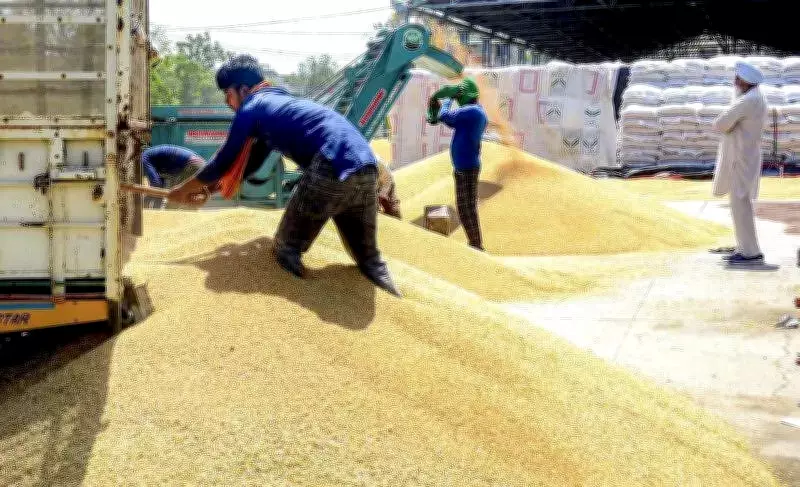
Farmers Halt Rail Blockade as Government Eases Wheat Procurement Norms in Punjab
In a significant development, farm organizations in Bathinda have called off their proposed rail blockade protest scheduled for Friday. This decision came after the Union Ministry of Consumer Affairs, Food and Public Distribution announced substantial relaxations in wheat procurement parameters for Punjab, bringing it on par with neighboring states.
Government Intervention Prevents Escalation
The protest threat emerged as Punjab farmers grew increasingly frustrated with what they perceived as discriminatory treatment compared to Haryana and Rajasthan. While those states had received procurement relaxations on April 9 and April 14 respectively, Punjab farmers faced stricter norms that severely hampered wheat procurement until mid-April.
Union Minister Pralhad Joshi confirmed in a social media statement that the government received requests for relaxation on April 9 following untimely rainfall affecting wheat crops. Assessment teams were promptly deployed across all districts on April 10, and based on field reports, the central government approved comprehensive relaxations for wheat procurement under the Rabi Marketing Season (RMS) 2026-27 framework.

Specific Relaxations Announced
The revised parameters include substantial changes to quality specifications:
- The limit for lustre loss has been increased to 70%
- Shrivelled and broken grain allowance has been raised to 15% from the previous 6%
- Both damaged and slightly damaged grain collectively can now constitute up to 6%
These relaxations apply to all districts of Punjab and Chandigarh and will remain effective from the commencement of RMS 2026-27. The Food Corporation of India had earlier recommended even more generous parameters, suggesting allowances of up to 20% for shrivelled grains and 80% for lustre loss without value cuts.
Farmer Leaders Adopt Wait-and-Watch Approach
In a joint statement, prominent farm leaders including Sarvan Singh Pandher of Kisan Mazdoor Morcha, Manjit Singh Dhaner of SKM, and Sukh Gill of Azad Kisan Morcha explained their decision: "As per the relaxations, we have suspended the proposed rail roko protest and will wait for three days to observe whether wheat purchase accelerates and whether governments address the problems farmers face in markets."
The leaders emphasized they will continue engaging with government officials during this period and will make further decisions based on the procurement situation over the next three days.
Broader Implications for Agricultural Policy
This development highlights several important aspects of India's agricultural procurement system. The prompt government response to field assessments demonstrates a recognition of weather-related challenges facing farmers. Minister Joshi noted that the relaxations aim specifically to "reduce hardships for farmers and prevent any distress sale of wheat."
The episode also reveals the effectiveness of farmer mobilization in drawing attention to regional disparities in agricultural policy implementation. While procurement had been sluggish until April 15, it gained momentum on April 16 following assurances that Punjab would receive parity with Haryana.
This resolution comes at a critical juncture in the wheat procurement season and sets important precedents for how government agencies respond to weather-affected crops and regional equity concerns in agricultural markets.






