Forest Authorities in Madhya Pradesh Face Dilemma Over Unprecedented Tiger Reserve Trespass
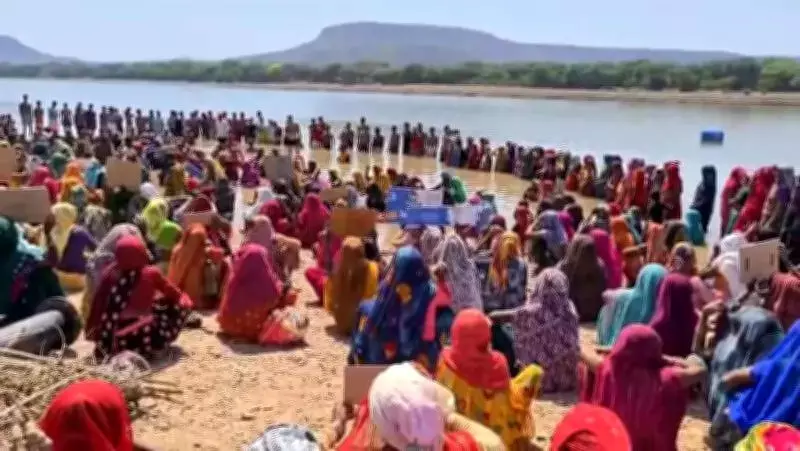
The Madhya Pradesh forest department finds itself in a perplexing and unprecedented situation as it grapples with how to respond to the first-ever mass trespass into the core area of the Panna Tiger Reserve (PTR). Over 200 tribal protesters, led by Aam Aadmi Party (AAP) worker Amit Bhatnagar, have entered the highly protected zone, agitating for compensation packages equivalent to those provided under the Ken-Betwa river linking project.
Legal Action Considered Against Protest Leader
Insiders within the PTR administration reveal that authorities are contemplating registering a case against Amit Bhatnagar under stringent provisions related to trespassing in a notified core area of a tiger reserve. Officials clarify that such offenses fall under Section 51(1-C) of the Wildlife Protection Act, which carries severe penalties.
The prescribed punishment includes imprisonment of not less than three years, extendable to seven years, accompanied by fines ranging from Rs 50,000 to Rs 2 lakh. In instances of subsequent convictions, the penalties escalate dramatically, with a minimum imprisonment of seven years and fines between Rs 5 lakh and a staggering Rs 50 lakh.

Protests Intensify Inside Protected Forest Area
The tribal protesters, under Bhatnagar's leadership, have been staging demonstrations for the past ten days, maintaining their presence within the core area of PTR throughout this period. The agitation, centered around Dhodan village, has intensified significantly, with protesters recently threatening to escalate their actions through a hunger strike and a symbolic hanging if their demands remain unmet.
Forest officials have repeatedly communicated with local administration seeking intervention, yet authorities are proceeding with extreme caution given the protest's substantial scale and inherent sensitivity. The situation is further complicated by jurisdictional overlaps—while the protest site falls within PTR's core region, administrative authority rests with Chhatarpur district, creating enforcement and coordination challenges between departments.
Dramatic Protest Scenes Unfold in Tiger Habitat
Protesters continue their demonstrations deep within the forest, with women, children, and elderly villagers entering the Ken river, smearing soil on their bodies, and chanting slogans demanding justice. Despite the dramatic nature of these protests, officials maintain that a significant portion of participants may have been misinformed about their actual compensation entitlements.
Chhatarpur Collector Paras Jaiswal stated, "Ninety percent of these people are from Panna district and have nothing to do with the Ken-Betwa project. They have been misled about the compensation package." Authorities are attempting to counsel protesters while keeping medical teams on standby as a precautionary measure.
Compensation Confusion Fuels Agitation
Officials identify confusion over compensation structures as the primary driver behind the ongoing agitation. Families directly displaced by the Ken-Betwa river linking project qualify for a rehabilitation package of Rs 12.5 lakh per family. In contrast, those affected by separate state irrigation projects in the region are entitled to Rs 7.5 lakh per family.
This disparity has created resentment among tribal communities, leading to the current standoff within one of India's most critical tiger habitats. The forest department's dilemma reflects broader tensions between conservation priorities and community rights, with authorities walking a tightrope between enforcing wildlife protection laws and addressing legitimate grievances of local populations.