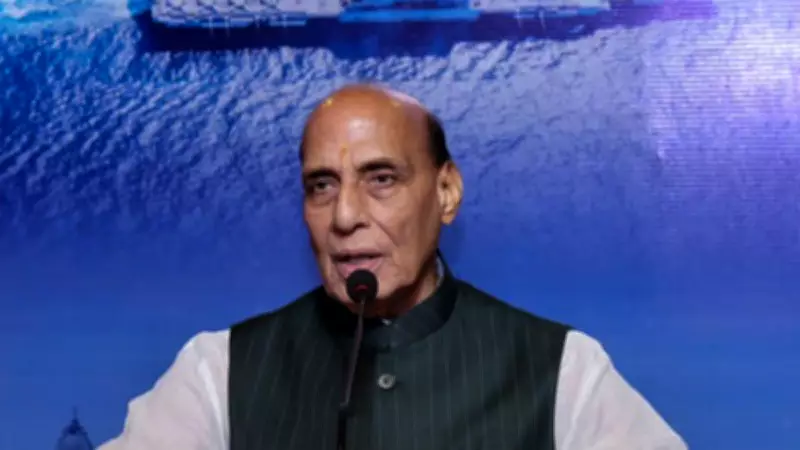
Defence Minister Rajnath Singh declared that future wars will still be won by human resolve and soldiers, not just artificial intelligence (AI). He made the statement during the commissioning ceremony of INS Mahendragiri, a new stealth frigate, at the Naval Dockyard in Visakhapatnam, Andhra Pradesh, on 11 July 2026.
Human Element Remains Decisive in Warfare
Singh emphasized that while AI and technology are transforming modern combat, the ultimate factor in victory remains the courage, determination, and sacrifice of soldiers. "No matter how advanced technology becomes, it is the human spirit that decides the outcome of a war," he said. The minister urged the armed forces to embrace technological advancements but never lose sight of the human element.
Andhra Pradesh as Defence Manufacturing Hub
Singh also highlighted that Andhra Pradesh has emerged as a new powerhouse for India's defence and aerospace manufacturing. He noted that the state hosts several major defence public sector undertakings and private companies, contributing significantly to the 'Make in India' initiative. The commissioning of INS Mahendragiri, built at a cost of approximately ₹3,500 crore, underscores the growing indigenous capability in warship construction.

INS Mahendragiri: A Symbol of Indigenous Capability
INS Mahendragiri is the seventh and final ship of the Nilgiri-class stealth frigates, designed by the Indian Navy's Directorate of Naval Design and built by Mazagon Dock Shipbuilders Limited. The ship is equipped with advanced stealth features, modern sensors, and weapon systems, including BrahMos supersonic cruise missiles. It is named after a mountain peak in Odisha and represents India's self-reliance in naval defence production.
Strategic Importance of the Commissioning
The commissioning ceremony was attended by senior naval officers, state officials, and defence industry representatives. Singh praised the Indian Navy for its role in safeguarding maritime interests and called for continued modernization to address emerging threats. He also reiterated the government's commitment to boosting domestic defence manufacturing, with a target of achieving ₹1.75 lakh crore in defence production by 2025.