Protests at Jantar Mantar and Sansad Chalo March
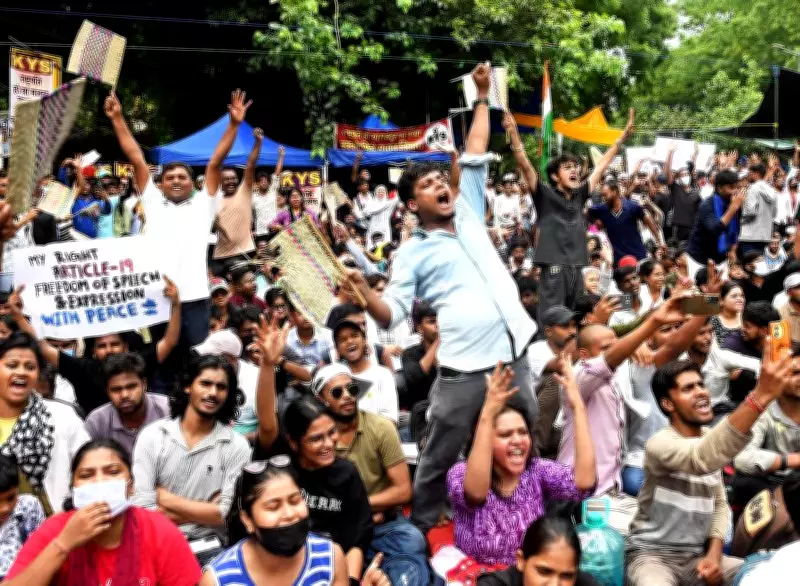
GenZ protesters at Jantar Mantar and their subsequent Sansad Chalo march have done what political leaders in Parliament should have done, according to The Tribune’s Editor-in-Chief Jyoti Malhotra. In her column, she argues that the street has overtaken political parties in invigorating the idea of the opposition. Congress leader Rahul Gandhi has realized that staying on the street tells the story better than in Parliament, she adds.
Government’s Initial Restraint and Misjudgment
Zoya Hasan, Professor Emerita at JNU, notes that the government’s initial response was one of calculated restraint, reflecting a strategic decision to avoid immediate repression. The expectation was that public anger over repeated exam mismanagement would subside, denying the opposition a chance to claim ownership of the issue. However, Hasan writes that the climate of fear that long inhibited dissent may no longer be politically effective.
R Jagannathan, senior journalist, states that the government misjudged the intensity of student angst against a broken exam system and dwindling quality job opportunities. NEET is a symptom, not the malaise, he writes, calling for multiple reforms with no short-term payoff.

Why the Student Movement Will Endure
RJD MP Manoj Kumar Jha asserts that the government’s violent response to students has strengthened the movement. He describes the gathering as proof of an organic, coherent purpose, signaling recognition that systems are being hollowed out, with education as the starkest example.
Yamini Aiyar, Visiting Professor at Brown University, writes that the tyranny of syllabus completion means classrooms cater only to the best students. She advocates disrupting the classroom consensus that works only for the elite.
Loss of Empathic Listening and Legitimacy
Sociologist Avijit Pathak warns that when students march to Parliament—the temple of democracy—it sends a message that a government intoxicated with power loses legitimacy if it loses the art of empathic listening.
Skyroot’s Vikram-1 Launch and ISRO Brain Drain
Meanwhile, India’s private space sector achieved a milestone with the maiden flight of Skyroot’s Vikram-1 rocket. TV Venkateswaran, visiting professor at IISER-Mohali, explains the growing demand for dedicated launch vehicles for small satellite constellations in low-Earth orbit, a trend Vikram-1 addresses.
However, Dinesh C Sharma, science commentator, highlights a brain drain from ISRO to private companies. He argues that the two phenomena are interlinked: the rise of private space firms is causing a talent exodus from ISRO. Sharma calls for restoring scientific autonomy and ending political use of institutions to prevent brain drain from becoming permanent.
Political Impact and Future Outlook
The protest movement has forced the opposition to recalibrate. The Congress party now sees the street as a viable platform. With the resignation of Education Minister Dharmendra Pradhan taking responsibility for the NEET paper leak, the opposition has gained momentum. The key question remains whether Rahul Gandhi can leverage this student energy into political advantage.