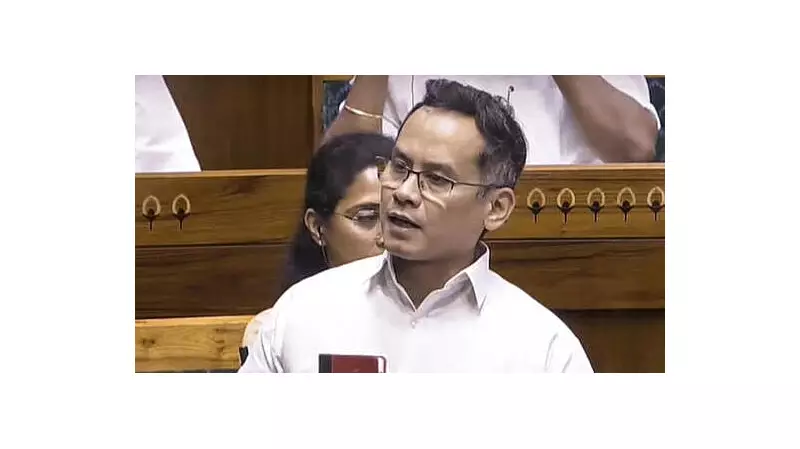
Congress Member of Parliament Gaurav Gogoi has issued a powerful statement condemning a recent racial attack on a student from Tripura in Uttarakhand. He forcefully asserted that people from India's northeastern states are Indians, not foreigners, following an incident that highlights persistent prejudice.
Details of the Dehradun Attack
The victim, identified as Anjel Chakma (24), hails from the Unakoti district of Tripura. The assault occurred on December 9, 2025, in Dehradun. According to reports, the attack was triggered when Chakma objected to racial slurs being directed at him and his younger brother by a group of six individuals.
The situation escalated rapidly, leading to a physical assault on the student. This incident has once again brought the issue of racial profiling and discrimination faced by citizens from the northeastern regions of India into sharp focus, even in other parts of the country.

Political Response and Condemnation
In response to this disturbing event, Gaurav Gogoi made a clear and unambiguous declaration. "People from northeastern states are Indians, not Chinese," he stated, addressing a deep-seated stereotype often wrongly associated with the distinct ethnic features of many from the region.
His statement serves as a reminder of the need for national unity and the rejection of xenophobic attitudes within the country. The attack underscores a critical gap in societal awareness and acceptance, where fellow citizens are targeted based on their appearance.
Broader Implications and Call for Action
This is not an isolated case. Similar incidents of racial abuse and violence against people from the Northeast have been reported from various metropolitan cities across India. The attack on Anjel Chakma points to a continuing problem that requires sustained educational, social, and legal intervention.
The consequences of such racism are severe, leading to trauma for the victims and fostering a sense of alienation. It challenges the very idea of India's celebrated diversity. Political leaders, civil society, and law enforcement agencies must work collectively to ensure:
- Swift justice for victims of racial crimes.
- Sensitization programs to combat stereotypes.
- Strict enforcement of laws against discrimination and hate speech.
The incident in Dehradun, and Gogoi's subsequent statement, act as a crucial wake-up call. Protecting the dignity and safety of every Indian, regardless of their ethnic origin or physical appearance, is fundamental to the nation's integrity.