Well before the undulating terrain of Oxfordshire became a peaceful haven for those on foot, the region around Watlington was a battleground in a fight for the heart of England. In 2015, an amateur treasure hunter was scouring a nearby field, hoping to discover an interesting piece of history for his personal collection. He had no intention of debunking history books or unveiling a secret buried over a thousand years ago. Yet, when his metal detector signaled something substantial underground, what he unearthed was far greater than any loose change.
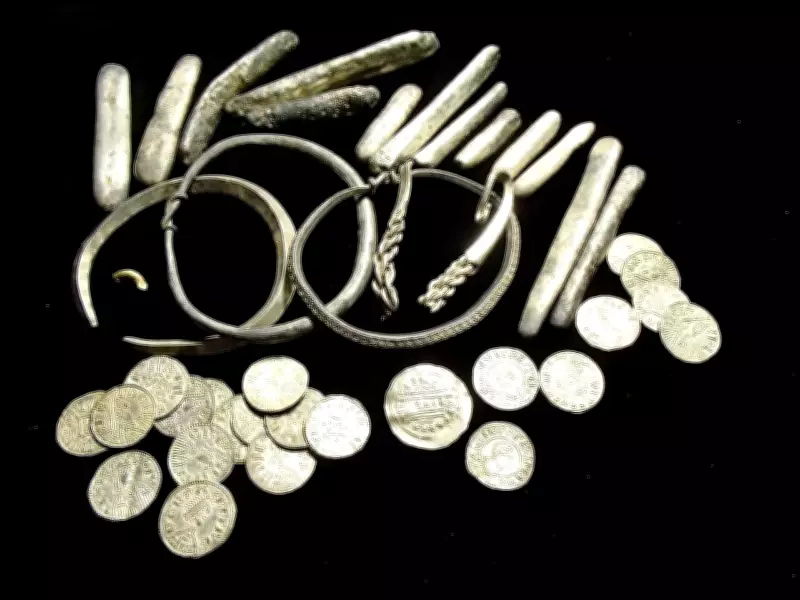
What emerged from the ground was an extensive collection of silver coins, jewelry, and ingots, now known as the Watlington Hoard. Though valuable on its own, the true value of the artifacts lay in the names marked on the coins. Among the findings were unique coins depicting images of two kings, a discovery that instantly shook the archaeological world. Instead of mere treasure, the hoard represents a historical and political document, proving that our knowledge of English history was rather incorrect and incomplete.
How the Silver Partnership Turned a Forgotten King into a Historical Figure
The most revolutionary finding relates to the relationship between two powerful men of the period. For ages, historical works spoke of Alfred the Great, the king of Wessex, who protected his territory from Viking attacks. His contemporary and fellow ruler, King Ceolwulf II of Mercia, was treated as an insignificant puppet under Viking influence. However, the findings tell a different story. According to the research paper The Watlington Hoard: Coinage, Kings and the Viking Great Army in Oxfordshire, the hoard contains "Two Emperors" coins.

This implies there was an elaborate alliance between the two kings, where they shared power and propaganda along their respective boundaries. The discovery of these coins in one burial site suggests that Ceolwulf was an important figure whom later historians in Wessex wanted to ignore. The coins thus helped rehabilitate a forgotten king while establishing that the battle against the Vikings was a joint venture between different kings, rather than being solely led by the great king. It shows how the winners write history, but the soil ultimately reveals it.
Emergency History: Why the Vikings Gave Rise to a Treasure
The Watlington Hoard provides a clear case of emergency history. Normally, no person buries all his wealth in a field randomly. As mentioned in the Ashmolean Museum press release titled Ashmolean Museum Raises £1.35 Million to Acquire the Hoard of King Alfred the Great, the deposition occurred in the latter part of the 870s when the region was in great turmoil due to the presence of the Viking Great Army, which had defeated other neighboring kingdoms and driven away their leaders.
The owner of this silver buried his wealth during a period of panic, perhaps when he thought raiders had entered his property. That such a hoard lay in the soil for more than a thousand years means the person did not return to collect it. This gap between burial and discovery adds another dimension of mystery. The hoard of silver becomes a symbol of human fear and survival.
Currently, the Watlington Hoard is one of the most prominent displays at the Ashmolean Museum in Oxford. This hoard is important because it shows how archaeology is not always about large excavation crews; sometimes, discovery occurs through a detector and a little curiosity.
It is astounding to realize that throughout the years, the land had been plowed by farmers and pastured by sheep while the two kings had unknowingly buried their pact a mere few inches beneath the surface. This realization leaves one wondering about other political secrets that may still be hidden in the nooks and crannies of the country.