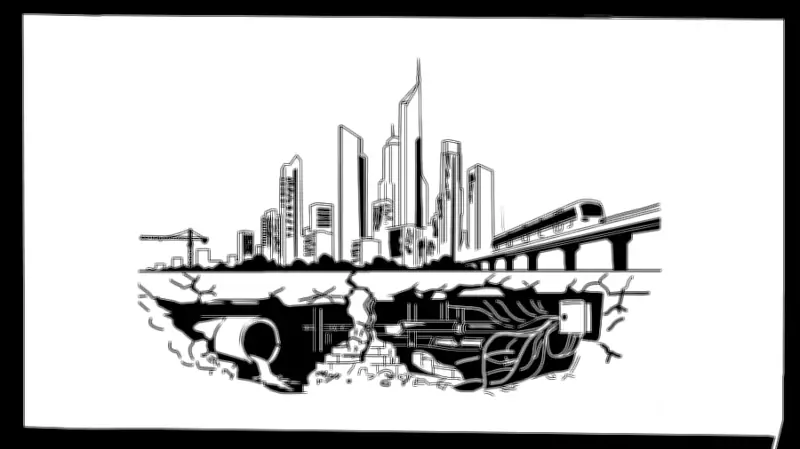
India's post-colonial identity continues to be shaped by what are often termed 'Third World' legacies, a term that originated during the Cold War to describe countries not aligned with either the US or Soviet blocs. These legacies, including non-alignment, state-led development, and a focus on global South solidarity, remain influential in India's foreign policy and domestic governance, despite the country's rapid economic growth and increasing global prominence.
Non-Alignment and Strategic Autonomy
One of the most enduring legacies is the principle of non-alignment, which India championed under Prime Minister Jawaharlal Nehru. This policy allowed India to maintain strategic autonomy during the Cold War, avoiding formal military alliances while engaging with both superpowers. Today, this legacy manifests in India's multi-aligned foreign policy, as seen in its participation in groupings like BRICS, the Shanghai Cooperation Organisation, and the Quad. According to analysts, India's ability to navigate between major powers, including the US, Russia, and China, reflects a pragmatic adaptation of non-alignment to a multipolar world.
State-Led Development Model
India's post-independence economic strategy heavily relied on state-led development, with central planning, public sector enterprises, and import substitution. While economic liberalization since 1991 has shifted towards market-oriented policies, the state still plays a significant role in sectors like infrastructure, banking, and social welfare. For instance, the government's 'Make in India' initiative and production-linked incentives aim to boost manufacturing, echoing earlier industrial policies. Critics argue that bureaucratic inefficiencies and corruption, remnants of the license raj, continue to hinder growth. However, supporters point to successful public programs like the Mahatma Gandhi National Rural Employment Guarantee Act as evidence of the state's enduring role in poverty alleviation.

Global South Solidarity
India has historically positioned itself as a leader of the developing world, advocating for issues like decolonization, a New International Economic Order, and climate justice. This solidarity is evident in India's active role in the United Nations, the Non-Aligned Movement, and the G77. In recent years, India has used its presidency of the G20 to champion the concerns of the global South, such as debt relief and access to vaccines. According to foreign policy experts, this legacy helps India build trust with African and Latin American nations, enhancing its soft power and diplomatic influence.
Domestic Challenges and Inequalities
Despite economic progress, India still grapples with Third World challenges like poverty, inequality, and inadequate public services. Approximately 10% of the population lives below the poverty line, and income inequality has widened since liberalization. Access to quality education and healthcare remains uneven, with rural areas lagging behind urban centers. The COVID-19 pandemic exposed these vulnerabilities, as India's healthcare system struggled to cope. These issues are compounded by social divisions based on caste, religion, and gender, which continue to impede inclusive development.
Cultural and Intellectual Legacies
The Third World identity also influences India's cultural and intellectual life. Post-colonial theory, subaltern studies, and movements for social justice draw on the experiences of colonialism and underdevelopment. Indian cinema, literature, and art often explore themes of poverty, resistance, and national identity. The term 'Third World' itself is contested, with some scholars arguing it is outdated and pejorative. Yet, for many, it remains a useful shorthand for shared historical experiences and aspirations.

Conclusion
India's enduring Third World legacies are a double-edged sword. On one hand, they provide a framework for strategic autonomy, South-South cooperation, and state intervention to address inequality. On the other hand, they can perpetuate bureaucratic inertia, protectionism, and a mindset of victimhood. As India aspires to become a developed nation by 2047, it must navigate these legacies, adapting them to contemporary realities while shedding those that hinder progress. The debate over these legacies reflects deeper questions about India's identity and its role in a changing world order.