

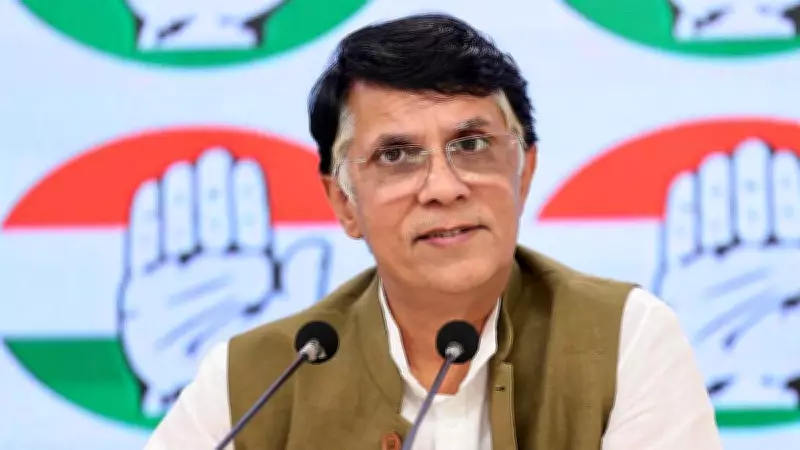
Guwahati Court Rejects Non-Bailable Arrest Warrant Against Congress Leader Pawan Khera
A court in Guwahati has denied a request for a non-bailable arrest warrant against senior Congress leader Pawan Khera. The case was filed by Riniki Bhuyan Sharma, the wife of Assam Chief Minister Himanta Biswa Sarma, on April 6, 2026. The court's decision marks a significant development in the ongoing political and legal tussle in Assam.
Background of the Case
Riniki Bhuyan Sharma lodged the complaint against Pawan Khera and all other individuals allegedly acting in connivance with him. The case was registered under specific legal provisions, though the exact charges have not been publicly detailed in the initial reports. The filing occurred amidst heightened political tensions in the state, with the Congress party and the ruling Bharatiya Janata Party (BJP) frequently clashing over various issues.
The court's ruling to deny the non-bailable warrant suggests that the evidence presented may not have met the stringent legal thresholds required for such an order. Non-bailable warrants are typically issued in serious offenses where there is a risk of the accused fleeing or tampering with evidence. The rejection indicates that the court found insufficient grounds to proceed with this severe measure at this stage.

Political Implications
This legal episode is closely watched due to the high-profile nature of the individuals involved. Pawan Khera is a prominent Congress spokesperson and a vocal critic of the BJP-led government in Assam and at the national level. Riniki Bhuyan Sharma, as the wife of the Chief Minister, holds significant social and political influence in the state.
The case adds to the series of legal and political confrontations between the Congress and BJP in Assam, where both parties have been engaged in fierce electoral battles and policy disputes. The timing of the case filing in early April 2026, and the subsequent court decision, could have ramifications for the political landscape in the lead-up to future elections.
Legal Proceedings and Next Steps
While the non-bailable warrant has been denied, the case itself is not necessarily closed. The court may proceed with further hearings or investigations based on the complaint. Legal experts note that the rejection of a warrant does not imply innocence or guilt but rather reflects on the procedural aspects of the case.
Potential next steps could include:
- Further examination of evidence by the court.
- Possible summons for Pawan Khera and other accused to appear before the court.
- Continuation of the trial based on the merits of the case.
The Congress party has welcomed the court's decision, viewing it as a vindication of their stance against what they describe as politically motivated cases. Meanwhile, representatives of Riniki Bhuyan Sharma have not issued an immediate statement following the ruling.
Context and Broader Significance
This incident underscores the often-blurred lines between politics and the judiciary in India, where legal actions are sometimes perceived as tools for political leverage. The involvement of family members of high-ranking politicians in such cases adds a layer of complexity and public interest.
As the situation develops, stakeholders from across the political spectrum are likely to monitor any updates closely. The court's decision may influence how similar cases are handled in the future, particularly those involving opposition leaders and allegations of connivance.
In summary, the Guwahati court's denial of the non-bailable arrest warrant against Pawan Khera represents a pivotal moment in this legal battle, with implications for both the individuals involved and the broader political dynamics in Assam.






