

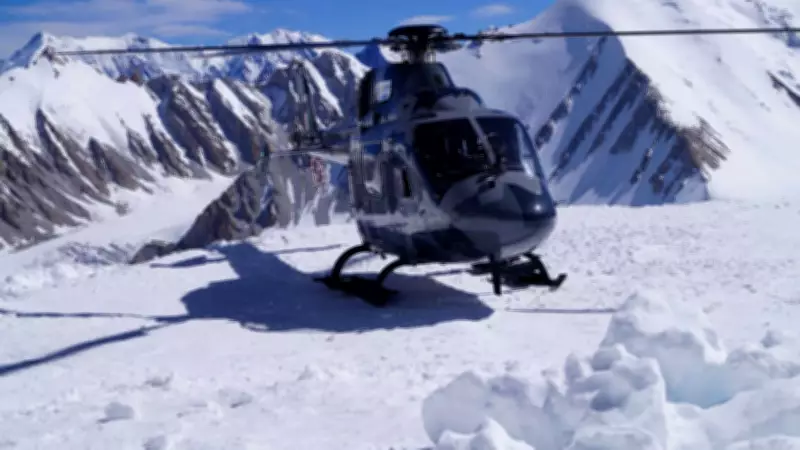
HAL's Light Utility Helicopter: A New Era for India's High-Altitude Defense
Since the 1960s, the Himalayan frontiers have echoed with the rotors of Chetak and Cheetah helicopters, machines pushed beyond their original limits in the harsh, frozen landscapes of Siachen. These helicopters, often landing on precarious "table top" helipads at extreme altitudes, have been vital lifelines for Indian forces. The Cheetah, a French design adapted with Chetak engines, has been license-produced by Hindustan Aeronautics Ltd (HAL) and has served since 1971, setting altitude records that stand today. It functions as a flying jeep, postal van, reconnaissance tool, artillery spotter, and crucial ambulance, saving countless lives in regions where even eagles hesitate to soar.
The Challenges of High-Altitude Helicopter Operations
Helicopters are not inherently designed for the altitudes routinely navigated by Indian pilots in the Himalayas. At these heights, thin air severely reduces rotor lift and engine power, limiting payload capacity and necessitating multiple sorties for tasks achievable in one at lower elevations. Key posts in the Siachen Glacier, such as Bana top, Ashok, and Sonam, range from 19,600 to 21,000 feet and rely solely on helicopters for connectivity and supply, underscoring the critical need for reliable aircraft.
Efforts to Replace the Aging Cheetah Fleet
As the Cheetah helicopters near the end of their service life, the Indian Army and Air Force have sought replacements since 2008. Initial competitions between the Russian Kamov-226 and Eurocopter Fennec did not yield contracts, prompting HAL to step in with an indigenous solution.

Introducing the Light Utility Helicopter (LUH)
In 2009, HAL proposed the Light Utility Helicopter (LUH), receiving approval from the Ministry of Defence. Designed specifically for super-high-altitude operations, the LUH can land at helipads up to 21,000 feet on the Saltoro Ridge, guarding the Siachen Glacier—a height surpassing the tallest peaks on five continents. Powered by a single HAL and Turbomeca Shakti-1U turboshaft engine, also used in the ALH Dhruv and LCH Prachand, the LUH achieves an impressive altitude of 21,300 feet. HAL is developing the more powerful HTSE-1,200 engine for future enhancements.
The 3-ton class helicopter boasts a speed of 235 km/h, capacity for six soldiers and two crew, and features a smart digital glass cockpit compatible with night vision devices. Its roles include medical evacuation, troop transport, utility missions, search and rescue, reconnaissance, surveillance, and VIP transport, making it a versatile asset for high-altitude regions.
Current Status and Future Prospects
Prototypes of the LUH have been undergoing tests since September 2016, with successful flights in Ladakh and landings at Amar and Sonam posts in 2020. The testing phase has been largely uneventful, though concerns about the auto-pilot are reportedly near resolution. The armed forces plan to order 171 helicopters—61 for the Air Force and 110 for the Army—with initial orders of six each already placed. HAL has prepared 10 choppers, pending certification, with deliveries set to begin from the Tumkuru plant in Karnataka, marking a significant step in India's self-reliance in defense aviation.
As the LUH begins to replace the Cheetah, it will become the new lifeline for soldiers in Siachen and other high-altitude areas, ensuring continued support and safety in one of the world's most challenging environments.






