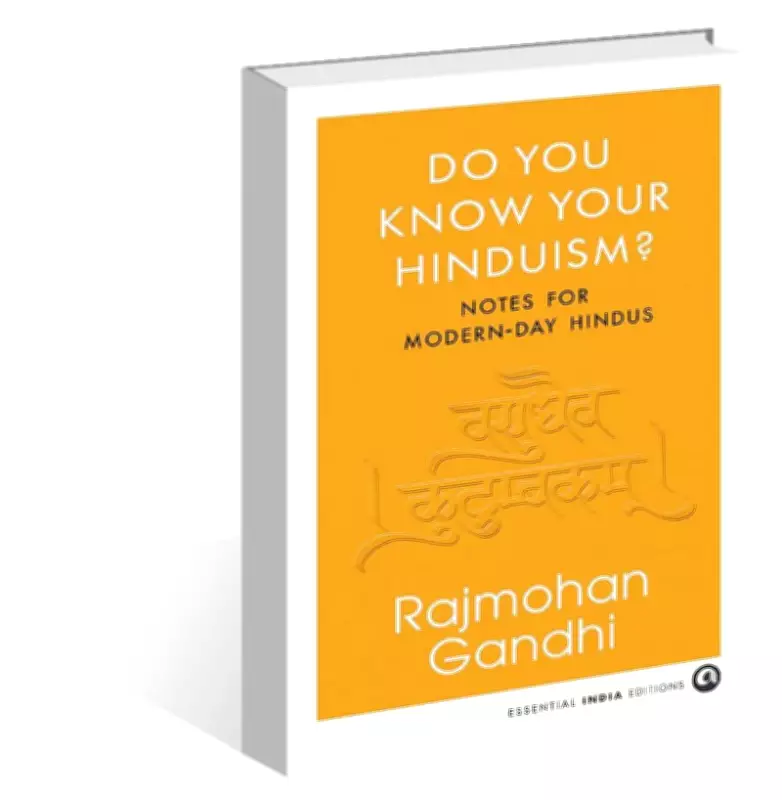
A recent book review in The Tribune delves into the contentious relationship between Hinduism and Hindutva, arguing that the discourse often misses the nuanced middle ground. The review, titled 'Hinduism vs Hindutva and Missing All That Lies in Between,' examines a new publication that seeks to bridge the gap between these two concepts.
The Central Thesis
The book under review posits that Hinduism, as a diverse and ancient religion, is often conflated with Hindutva, a political ideology that seeks to define Indian culture in terms of Hindu values. The author argues that this conflation leads to a simplistic binary, ignoring the spectrum of beliefs and practices that exist in between. The review highlights how the book attempts to deconstruct this binary by exploring historical, philosophical, and sociological dimensions.
Key Arguments
- Historical Context: The book traces the evolution of Hindutva from its 19th-century origins to its current political manifestations, showing how it differs from traditional Hindu practices.
- Philosophical Differences: It contrasts the pluralistic and inclusive nature of Hinduism with the exclusivist tendencies of Hindutva, emphasizing that the latter is a modern construct.
- Sociological Impact: The review notes that the book examines how Hindutva has been used to mobilize political support, often at the expense of minority communities and secular ideals.
Missing Nuances
The review criticizes both sides of the debate for ignoring the middle ground. It points out that while critics of Hindutva often paint all Hindus with the same brush, supporters of Hindutva dismiss legitimate concerns about communalism. The book, according to the review, offers a more balanced perspective by acknowledging the diversity within Hinduism and the complex motivations behind Hindutva's rise.

Strengths of the Book
- Comprehensive Research: The author draws on a wide range of sources, from ancient texts to contemporary politics, to support the arguments.
- Accessible Writing: Despite the complexity of the topic, the book is written in a clear and engaging style, making it accessible to a general audience.
- Balanced Approach: The review applauds the author for avoiding polemics and instead presenting a nuanced analysis that encourages critical thinking.
Conclusion
The review concludes that the book is a timely contribution to the ongoing debate about religion and politics in India. It calls for more such works that explore the gray areas, rather than reinforcing polarized positions. For readers interested in understanding the intricacies of Hinduism and Hindutva, this book offers valuable insights.