

U.S. House Drops Corruption Bomb on Jared Kushner Over $5 Billion Gulf Solicitation
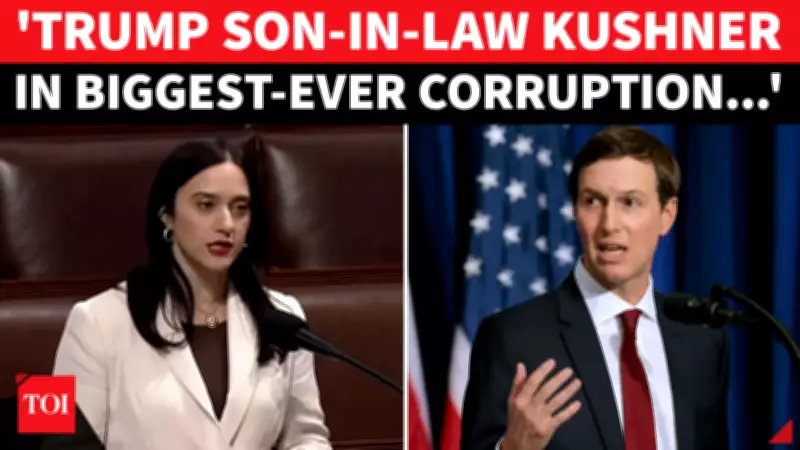
In a dramatic development on the House floor, Representative Yassamin Ansari, a Democrat from Arizona, has leveled serious allegations of corruption against Jared Kushner, the son-in-law of former President Donald Trump. The accusations center on Kushner's reported solicitation of $5 billion from Gulf states during his tenure in the Trump administration, amid escalating tensions with Iran.
Ansari's Fiery Speech Exposes Ethical Concerns
During her remarks, Rep. Ansari did not mince words, describing the situation as involving "naked, open, brazen corruption." She criticized Kushner's conduct and broader actions by the Trump administration, highlighting what she termed as significant ethical lapses. Ansari emphasized the need for greater scrutiny and accountability, particularly in light of the ongoing Iran conflict, which she suggested provided a backdrop for these alleged activities.
Context of the Iran Conflict and Kushner's Role
The allegations come at a time when the United States is grappling with renewed tensions in the Middle East, specifically involving Iran. Ansari's speech pointed to Kushner's role during this period, implying that his actions may have been influenced by or contributed to the geopolitical dynamics. She called for a thorough investigation into the $5 billion solicitation from Gulf nations, questioning the motives and transparency of such dealings.

Ansari's critique extends beyond Kushner to encompass the Trump administration's overall approach, which she argued was marred by a lack of ethical oversight. Her call for accountability resonates with ongoing debates about corruption and governance in U.S. politics.
Broader Implications for U.S. Politics and Foreign Policy
This incident raises important questions about the intersection of personal financial interests and public service. If proven, the allegations could have far-reaching consequences for Kushner's reputation and legacy, as well as for the Trump administration's historical assessment. Moreover, it underscores the need for robust mechanisms to prevent conflicts of interest in high-level government positions.
Ansari's speech has sparked renewed interest in the ethical standards of political appointees, with many calling for bipartisan efforts to strengthen anti-corruption measures. As the story develops, it remains to be seen how these allegations will impact future policy discussions and public trust in governmental institutions.






