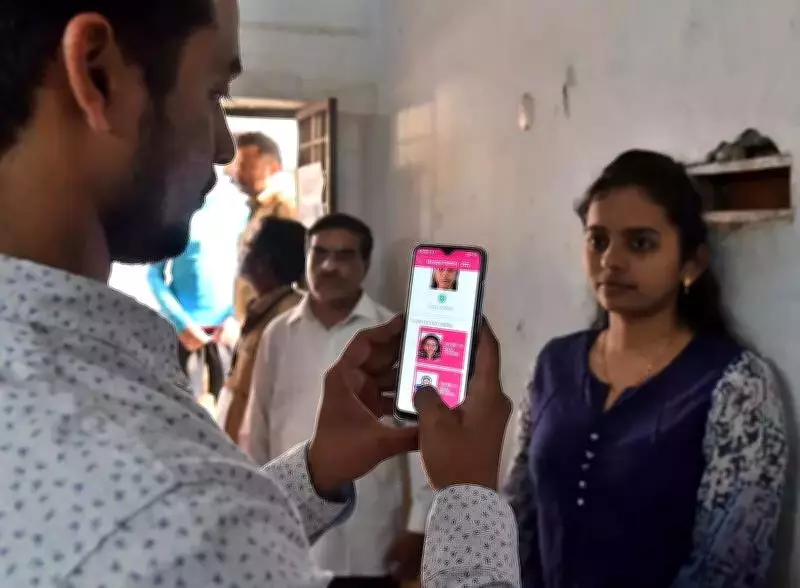
Hyderabad BLOs Grapple with Technical and Operational Challenges in Electoral Mapping
Booth-level officers (BLOs) in Hyderabad, each tasked with managing approximately 1,200 electors, are encountering significant operational hurdles that are compromising the quality of booth-level electoral mapping. Field reports highlight persistent app malfunctions, inconsistent training protocols, and deficiencies in house-to-house verification processes, casting doubt on the precision of the ongoing pre-SIR (Summary Revision of Electoral Rolls) mapping initiative.
App Failures and Technical Incompatibilities Disrupt Mapping Process
The Election Commission of India introduced a specialized mobile application with secure login features to assist BLOs in executing pre-SIR mapping according to established guidelines. However, the implementation has been marred by technical issues. Numerous smartphones utilized by BLOs are incompatible with the app, leading to frequent crashes, glitches, and complete failures to launch. These disruptions are particularly problematic given that BLOs are already overwhelmed with concurrent responsibilities and stringent deadlines, resulting in incomplete verification in certain instances.
Such technical setbacks directly impact critical electoral functions, including family-link verifications and the tracking of historical voting records, potentially undermining the integrity of the electoral roll.

AIMIM Alleges Inadequate Training and Proposes Solutions
SA Hussain Anwar, joint secretary of the All India Majlis-e-Ittehadul Muslimeen (AIMIM), has raised serious concerns regarding the training provided to BLOs. He asserts that officers, especially those from rural backgrounds, lack sufficient technical expertise to operate the mapping application effectively, a situation exacerbated by poor internet connectivity in remote areas. Anwar emphasized that this deficiency hampers progeny mapping and other essential tasks, forcing BLOs to rely on makeshift workarounds that increase the likelihood of errors in family linkages and geographical mapping.
Referencing Supreme Court directives from cases in West Bengal and Tamil Nadu, AIMIM pointed out that the court had previously instructed the Election Commission to deploy additional personnel to support BLOs in handling documents, objections, and hearings for potentially affected individuals. The party argued that the current ratio of one BLO to 1,200 electors is insufficient and has not yielded satisfactory outcomes, prompting judicial intervention to involve government employees in the SIR process.
Citizen-Access Model Suggested to Enhance Accuracy
In a bid to improve electoral mapping accuracy, AIMIM has proposed a citizen-access model for the mapping platform. This approach would allow electors to directly access the system to verify or update their residential coordinates. The party contends that such a measure could significantly enhance the completeness and reliability of electoral geography by leveraging public participation to fill gaps left by technical and operational limitations.
The ongoing challenges faced by Hyderabad's BLOs underscore the need for robust technical support, comprehensive training, and innovative solutions to ensure the electoral roll's accuracy ahead of future elections. As these issues persist, stakeholders are calling for immediate remedial actions to safeguard the democratic process.