

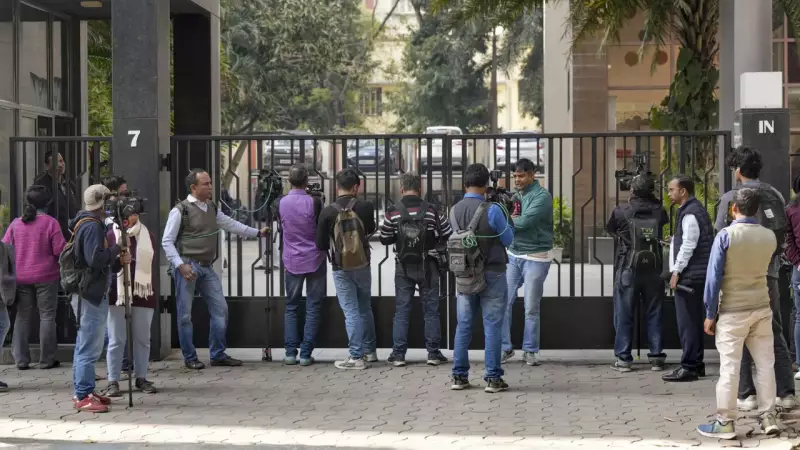
The Indian Political Action Committee (I-PAC), a prominent political consultancy, has strongly criticized recent searches conducted by the Enforcement Directorate (ED) at its premises, labeling the action an "unsettling precedent." The federal probe agency carried out raids at I-PAC's offices and the Kolkata residence of its director, Pratik Jain, on Thursday, as part of an ongoing money laundering investigation linked to an alleged coal smuggling case.
Firm's Strong Reaction and Non-Partisan Stance
In an official statement released on Friday, I-PAC expressed its dismay over the events of the previous day. The firm described it as a "difficult and unfortunate day for a professional organisation" like itself. It raised serious concerns, stating that such actions set a disturbing trend for entities operating in the political advisory space.
The consultancy was unequivocal in stating its commitment to the legal process, confirming it had provided full cooperation to the ED officials during the searches and would continue to do so as required. It emphasized its engagement with the process was in complete accordance and respect for the law.

In a significant clarification of its business model, I-PAC detailed its clientele, which it says includes parties from across the ideological spectrum. The firm stated it has worked in a professional advisory capacity with the Bharatiya Janata Party (BJP), Indian National Congress, Aam Aadmi Party (AAP), All India Trinamool Congress (TMC), Dravida Munnetra Kazhagam (DMK), YSR Congress Party, Telangana Rashtra Samithi (now BRS), Janata Dal (United), and Shiv Sena, among others.
"We do not contest elections or hold political office. Our role is limited to transparent and professional political consulting, uninfluenced by differences in political ideology," the firm's statement added, underlining its position as an external consultancy rather than a political entity.
High Drama and Allegations During Raids
The searches conducted by the ED were not without incident, unfolding with considerable drama. The probe agency targeted I-PAC's Salt Lake office in Kolkata, Pratik Jain's residence, and other linked locations in West Bengal and Delhi.
The ED has made serious allegations regarding the conduct of the raids. It claimed that West Bengal Chief Minister Mamata Banerjee interfered in the operation, allegedly removing digital devices and key documents with the support of the police. The agency further alleged that its officials were forced to terminate the searches prematurely without making any seizures due to this interference.
Central to the probe is the allegation that funds worth approximately Rs 20 crore, generated from the alleged coal pilferage and moved through hawala channels, were eventually routed to I-PAC. In light of the events, the ED has approached the court seeking protection. This includes safeguards against the tampering of any seized data and relief from First Information Reports (FIRs) that were filed against its officials in connection with the raid.
Broader Implications and Industry Concerns
This episode marks a rare instance where a major political consultancy firm, which works discreetly behind the scenes for numerous parties, has come under such direct scrutiny from a central investigative agency. I-PAC's strong public statement reflects its concern over the potential chilling effect such actions could have on the industry of political strategy and management.
By highlighting its work for both national ruling and opposition parties, the firm is positioning the raids as an action against a neutral service provider rather than a politically aligned entity. The case brings into focus the intersection of political consulting, financial regulations, and the reach of money laundering probes in India's complex political landscape.
The developments are likely to spark further debate on the regulation and transparency of funds within the political ecosystem, especially concerning third-party service providers. As the legal process unfolds, the manner in which this probe proceeds will be closely watched by political and corporate circles alike.






