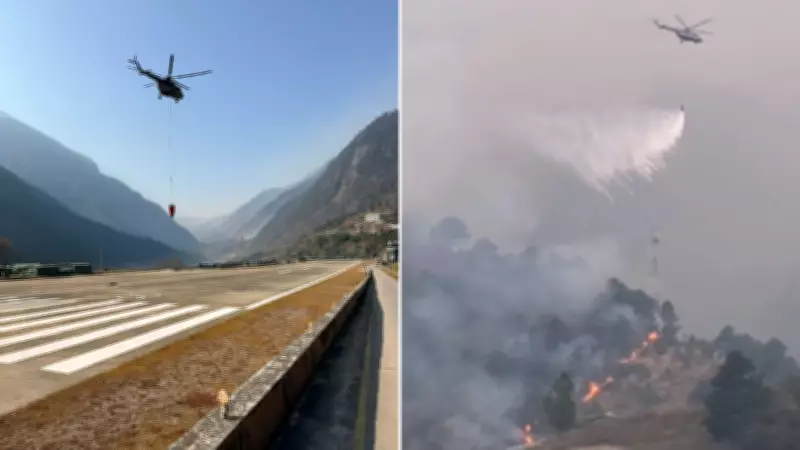
IAF Deploys Heavy-Lift Helicopters for Critical Firefighting Missions in Northeast
The Indian Air Force (IAF) has mobilized its formidable Mi-17 V5 helicopters to execute high-stakes aerial firefighting operations across two critical wildfire-hit locations in India's Northeast. These heavy-lift helicopters are being deployed to combat raging blazes in some of the most difficult and treacherous terrains, operating under extreme flying conditions that test both man and machine.
Dual Front Operations in Arunachal Pradesh and Nagaland
The firefighting missions are currently underway at two separate fronts: Walong in Arunachal Pradesh and the picturesque Dzukou Valley in Nagaland. IAF crews are conducting continuous, relentless water-dropping missions to contain and extinguish fires that threaten these ecologically sensitive regions. The operations are particularly challenging due to the combination of steep slopes, poor visibility, and rarefied air at high altitudes.
At Walong, the IAF helicopters have achieved a significant victory by successfully extinguishing a major blaze after executing precision drops totaling 139,800 litres of water over the affected area. This massive volume of water, delivered through carefully coordinated sorties, has brought the dangerous fire under control.

Simultaneously, firefighting efforts continue unabated in the Dzukou Valley, where Mi-17 V5 helicopters are drawing water from Padumpokhiri Lake near Dimapur to tackle persistent fires near Japfu Peak. The strategic use of this water source demonstrates the operational planning involved in these complex missions.
Visual Documentation of Aerial Firefighting
The Indian Air Force has shared compelling video footage that provides a cockpit-view perspective of these operations. The visuals show helicopters flying at low altitudes over the affected areas and releasing water directly onto the flames with remarkable precision. "Indian Air Force helicopters are battling wildfires at two fronts, conducting relentless aerial firefighting missions in challenging terrain," stated an official post accompanying the footage.
The post further elaborated: "At Walong, Arunachal Pradesh, a total of 139,800 litres of water has been dropped, successfully extinguishing the blaze. Simultaneously, operations continue over Dzukou Valley in Nagaland with Mi-17 V5 helicopters drawing water from Padumpokhiri Lake (Dimapur) to battle fires near Japfu Peak amid steep slopes, poor visibility and rarefied air."
Extreme Operational Challenges
Defense officials have emphasized that these missions are being carried out under exceptionally challenging operational conditions. Pilots must navigate through difficult terrain with limited visibility while maintaining absolute precision during aerial water drops. The combination of technical skill and courage required for these operations cannot be overstated, as helicopters operate at the edge of their performance envelopes in these demanding environments.
The Knights Helicopter Unit: A Legacy of Service
The Mi-17 V5 helicopters involved in these critical firefighting operations belong to the IAF's 109 Helicopter Unit of the Southern Air Command, popularly known as the "Knights Helicopter Unit." This elite unit has built an impressive reputation through frequent deployments for disaster relief and rescue missions across the region and beyond.
The unit's experience includes a significant deployment to Sri Lanka under Operation Sagar Bandhu following a severe cyclone. During that mission, the helicopters transported essential relief supplies including food, water, and medicines to affected communities, carrying out nearly 100 missions over ten days and making substantial contributions to humanitarian relief efforts, according to defense sources cited by All India Radio.
This current firefighting deployment in Northeast India represents another chapter in the unit's distinguished service record, demonstrating the versatility and capability of both the aircraft and the personnel who operate them in responding to natural disasters and environmental emergencies.