AI Tools Gave Indian Army Strategic Edge in Predicting Chinese LAC Activity
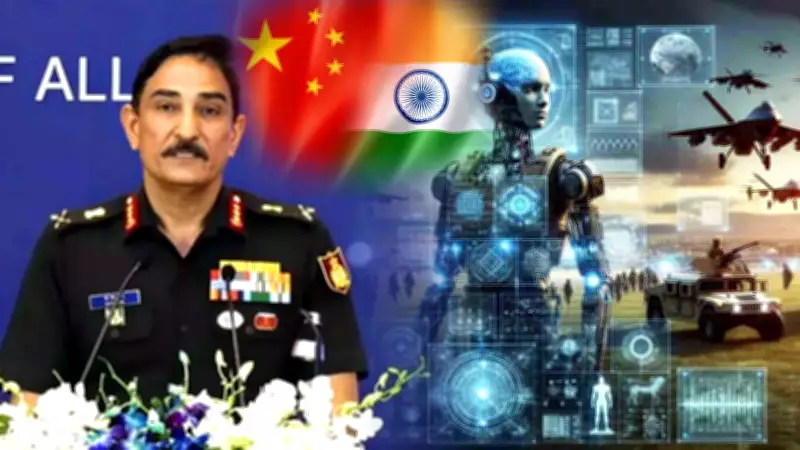
Artificial Intelligence has transitioned from theoretical concept to a critical operational asset on the modern battlefield. Lieutenant General Dinesh Singh Rana has disclosed that AI-enabled systems played a pivotal role in helping the Indian Army anticipate and effectively counter a significant Chinese military maneuver along the sensitive Line of Actual Control in Arunachal Pradesh.
Unprecedented Detection and Advanced Preparation
Speaking at the prestigious India AI Impact Summit 2026, Lt Gen Rana detailed how sophisticated AI prediction tools successfully identified unusual patterns and indicators that suggested an impending Chinese military build-up. This early detection provided Indian forces with crucial time to prepare and deploy appropriate countermeasures in advance, fundamentally altering the strategic dynamic in the region.
The general described the Chinese action as unprecedented in scale and nature, emphasizing that the AI systems delivered what he termed a "decisive strategic advantage" to India. This technological foresight allowed commanders to make informed decisions based on data-driven insights rather than relying solely on traditional intelligence methods.

Lessons from Global Conflicts and Future Requirements
Drawing important parallels from contemporary conflicts, particularly the ongoing Russia-Ukraine war, Lt Gen Rana stressed the urgent need for developing scalable, cost-effective AI systems and autonomous platforms. He cautioned against over-reliance on exclusively high-end capabilities, advocating instead for a balanced approach that prioritizes practical, deployable solutions that can be rapidly adapted to evolving battlefield conditions.
"AI is no longer a futuristic concept but a present-day force multiplier," Rana asserted during his summit address. "The experiences from Ukraine have demonstrated that accessible, robust AI tools can provide disproportionate advantages even against technologically superior adversaries."
Global Power Shifts and India's Responsible Approach
The senior military leader highlighted how artificial intelligence is becoming a primary driver of global power shifts, noting the intense investments and development races currently underway between major powers like the United States and China. In this competitive landscape, he emphasized that India must pursue technological ambition with equal measures of responsibility and ethical consideration.
Rana pointed to India's historical approach in the nuclear domain as a model for how the nation should navigate the AI revolution—combining technological advancement with strategic restraint and international responsibility. This balanced perspective, he suggested, will be crucial as AI continues to reshape military doctrines and international security paradigms.
The revelation underscores the Indian military's growing sophistication in integrating cutting-edge technology into operational planning and execution. As border tensions along the LAC remain a persistent security challenge, such AI capabilities represent a significant enhancement to India's defensive and deterrent posture in the strategically vital region.