India Eyes New Rocket-Missile Force to Counter Regional Threats
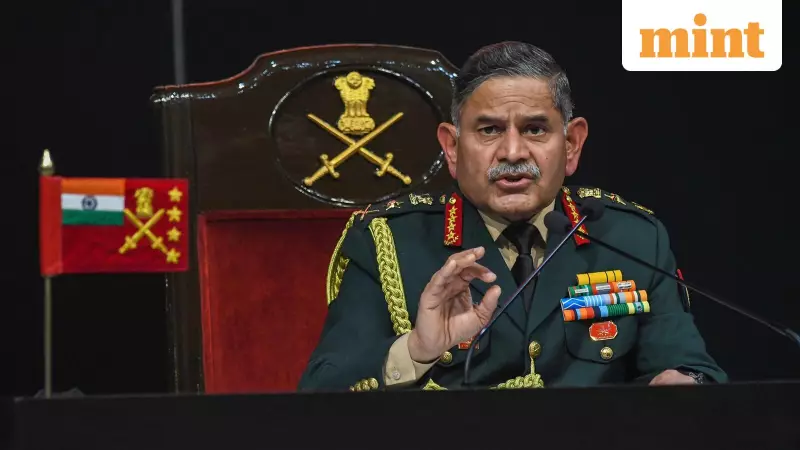
India is actively considering the creation of a dedicated "rocket-cum-missile" force. Army Chief General Upendra Dwivedi made this announcement during a press conference on Tuesday. He spoke ahead of Army Day, emphasizing the evolving security landscape in the region.
Regional Security Drives the Need
General Dwivedi pointed directly to neighboring nations. He stated that Pakistan has already established a rocket force. China has also created a similar unit. The Chinese People's Liberation Army Rocket Force (PLARF) is viewed as a highly potent military wing. China has consistently strengthened this force since 2016.
"We are looking towards a rocket-missile force. It is the need of the hour that we also have such a force," General Dwivedi said. He explained that rockets and missiles have become interdependent in modern warfare. Achieving a major impact now requires both systems working together.

Current Structure and Future Decisions
Currently, the Indian Army's missiles and rockets fall under two units. The Corps of Army Air Defence (AAD) and the Artillery regiments handle them. The new force would represent a significant organizational shift.
The Army Chief outlined key questions that need resolution. "We have to decide whether it will be operated at the Army level or it will be directly under the Ministry of Defence or at the level of the Chief of Defence Staff," he noted. Initially, the force will operate under the Army's existing artillery regiments. However, its future size, scope, and command structure may evolve.
Enhanced Strike Capabilities and Broader Reforms
General Dwivedi highlighted India's progress in long-range strike capabilities. The induction of advanced systems like the BrahMos, Pralay, and Pinaka missiles has bolstered combat prowess. These lessons stem partly from experiences like Operation Sindoor.
The Army is undergoing major reforms beyond this new force. A restructuring effort is focused on enhancing multi-domain combat capabilities. The goal is to achieve a better balance between combat and support units.
"We have adopted a spiral development approach centred on organisation rather than equipment alone," General Dwivedi explained. This has led to the creation of new specialized units.
- Rudra Brigades: Designed for high-tempo, multi-domain operations.
- Bhairav Battalions: Focused on agility and creating disruptive effects.
- Shaktibaan regiments and Divyastra batteries: Will utilize Unmanned Aerial Systems (UAS) and counter-UAS technology for extended reach and real-time targeting.
- Ashni platoons: Units in development to enhance precision, surveillance, and strike options at the tactical level.
Progress Towards Integrated Commands
The Army Chief described a vision for a transformed force. "We are progressing towards integrated structures in the form of theatre commands," he stated. This is a deliberate and consultative process. The aim is to create an army capable of smart thinking, deep strikes, fast movement, and resilient operations.
Warfighting doctrines are being updated to succeed in all operational quadrants. Organizational mechanisms are continually refined to improve efficiency and reorient manpower.
Border Incident Addressed
In a related development, General Dwivedi confirmed a recent border issue. The Indian Army strongly raised concerns with Pakistan's Director General of Military Operations. The issue involved sightings of Pakistani drones along the border in the Jammu Sector over the preceding three days.
This context underscores the immediate security challenges facing the nation. The proposed rocket-missile force is part of a broader strategic response to a complex regional environment.