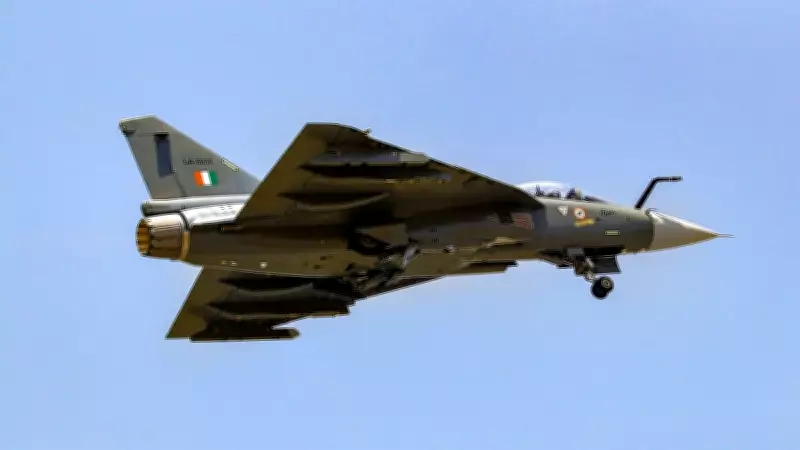
The Defence Ministry has officially kick-started the ambitious Advanced Medium Combat Aircraft (AMCA) project, issuing a Request for Proposal (RFP) to leading Indian defence manufacturers for the production of a fifth-generation fighter jet. The move marks a significant step towards India's goal of achieving self-reliance in advanced military aviation.
Bids Invited from Key Players
According to sources, the government has issued the tender to Tata Advanced Systems, Larsen and Toubro (L&T), and Bharat Forge as part of the selection process. These companies are expected to submit their proposals for manufacturing the AMCA, which is designed to be a stealth, multi-role combat aircraft with advanced avionics and weapon systems.
Indigenous Development
The AMCA project is a cornerstone of India's indigenous defence manufacturing push under the 'Make in India' initiative. The fighter jet is being developed by the Aeronautical Development Agency (ADA) in collaboration with the Defence Research and Development Organisation (DRDO). The aircraft is expected to feature stealth capabilities, supercruise, and advanced sensor fusion, making it comparable to other fifth-generation fighters like the US F-35 and Russian Su-57.

The RFP includes detailed specifications and timelines for the project. The selected manufacturer will be responsible for producing the aircraft in large numbers to replace the aging fleet of MiG-29s, Jaguars, and Mirage 2000s in the Indian Air Force (IAF). The IAF has projected a requirement for around 200 AMCA jets over the next two decades.
Strategic Implications
This project is expected to boost India's aerospace ecosystem, creating thousands of jobs and fostering technological advancements. It will also reduce India's dependence on foreign suppliers for critical defence equipment. The AMCA is planned to have two variants: an initial Mark 1 version with existing engines and a more advanced Mark 2 version with a more powerful engine and enhanced capabilities.
The issuance of the RFP comes after years of design and development work. The AMCA programme is estimated to cost around ₹15,000 crore for the development phase, with total project costs expected to exceed ₹1 lakh crore over its lifecycle. The first flight of the AMCA is expected by 2032, with induction into the IAF by 2035.
The Defence Ministry has emphasised that the project will be executed with strict timelines and cost efficiency. The selection process is expected to be completed within six months, after which the development and manufacturing phase will begin.