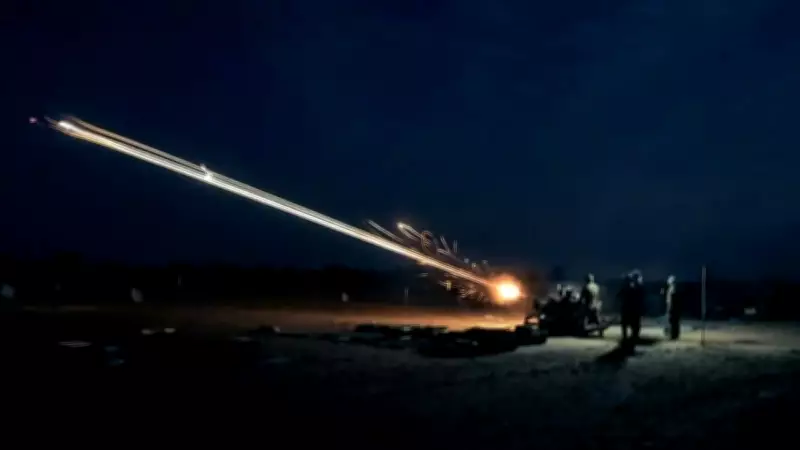
Indian Army Conducts High-Intensity Air Defence Drills in Jaisalmer Desert
In a significant demonstration of operational readiness, the Indian Army has conducted comprehensive air defence exercises in the challenging desert terrain of Jaisalmer. These drills come at a critical time when global tensions, particularly between Iran and the United States, highlight the importance of robust aerial defense capabilities.
Realistic Battlefield Conditions and Modern Threats
The Southern Command's Air Defence Gunners executed a high-intensity field firing exercise under realistic battlefield conditions. This rigorous testing focused on precision engagement and rapid response capabilities against both conventional aerial targets and emerging threats. Senior Army officials were present to observe the exercise, which was specifically designed to validate the effectiveness of advanced air defence systems and troop preparedness.
During the exercise, military units demonstrated coordinated operations including:

- Advanced tracking and identification of aerial targets
- Neutralization of simulated enemy aircraft and unmanned aerial systems (UAS)
- Integration of cutting-edge radar and surveillance equipment
- Seamless detection and engagement protocols
Focus on Drone Warfare and Technological Edge
Defence sources emphasized that these exercises address the growing challenge of drone warfare, which is increasingly shaping modern battlefields. The integration of advanced weapon platforms and surveillance systems showcased the technological superiority of Army Air Defence units, highlighting their ability to counter evolving aerial threats.
"The exercise has reinforced our capability to dominate the emerging aerial battlespace," stated an official, noting that continuous training in diverse terrains, particularly deserts, is essential for ensuring swift and effective responses in real-world conflict scenarios.
Strategic Importance of Desert Training
The Southern Command, responsible for vast and strategically important regions, regularly conducts such exercises to enhance operational efficiency and inter-unit coordination. The desert environment presents unique challenges including:
- Variable visibility conditions
- Mobility constraints in sandy terrain
- Extreme weather fluctuations
These conditions provide an ideal testing ground for air defence operations, allowing forces to adapt to challenging combat environments.
Modernization and Future Warfare Preparedness
Military experts note that with the rapid evolution of aerial threats—particularly low-cost drones and swarm tactics—air defence units play a crucial role in safeguarding both military assets and civilian infrastructure. The successful completion of these complex drills reflects the Indian Army's commitment to maintaining high levels of combat readiness and adaptability.
The exercise underscores the Army's focus on modernization and its readiness to tackle future warfare challenges with precision, agility, and technological superiority. As aerial threats continue to evolve, such rigorous testing ensures that India's air defence capabilities remain robust and responsive to contemporary conflict scenarios.