

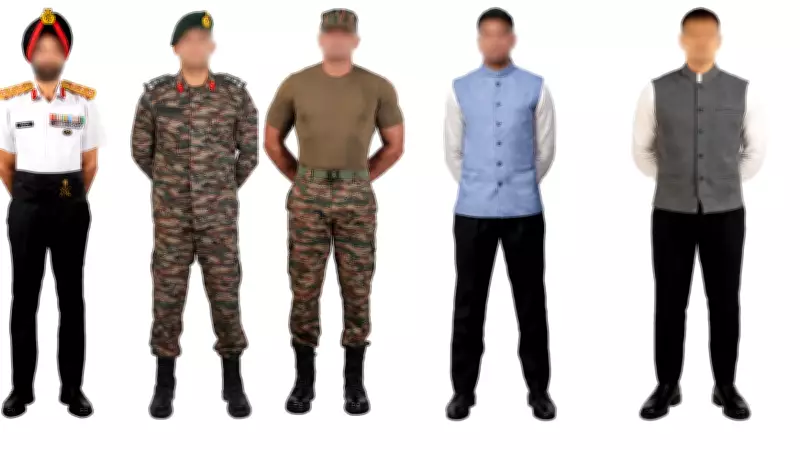
The Indian Army has unveiled a comprehensive overhaul of its dress regulations, marking a significant step in shedding colonial-era customs and embracing indigenous symbols. The newly issued Army Uniforms-2026 booklet introduces changes that range from ceremonial to practical, aiming to align military attire with India's sovereign identity.
Key Changes in Uniform Regulations
Among the most notable reforms is the decision that Reviewing Officers will no longer carry swords during parades. Swords will now be restricted to parade commanders, contingent commanders, and designated personnel during major events like Republic Day and Independence Day. The archaic term 'Royal' has been removed from military terminology, and the indigenous Bandi jacket has been incorporated as part of officers' formal civilian attire. Additionally, a new Battle Jacket will gradually replace the jersey-based winter dress over a three-year period, with full transition expected by June 2029.
Rationale Behind the Reforms
The booklet states that these changes are designed to bring military traditions closer to India's evolving national identity. It describes the exercise as a careful balancing act between preserving military traditions and removing symbols that no longer reflect modern India. The objective is not to dismantle military heritage but to ensure that symbols increasingly reflect Indian history rather than imperial legacies.

Standardisation and Personal Appearance
The reforms also standardise dress regulations across the Army, covering ceremonial dress, working uniforms, combat clothing, and personal appearance. The booklet bars radical hairstyles, unauthorised beards, visible electronic gadgets, body piercings, tattoos, and cosmetic make-up while in uniform. It also prohibits wearing military uniform at political events, religious gatherings, protests, weddings, and private parties without authorisation. Contact lenses are permitted but must match the natural eye colour.
Part of a Broader Decolonisation Effort
The uniform reforms are part of a wider institutional effort to remove colonial remnants. Earlier this year, the Army renamed 246 roads, buildings, colonies, and military facilities across cantonments, replacing British-era names with those honouring Indian military heroes. Previous reforms in February 2023 discontinued colonial-era practices like horse-drawn buggies at official functions and ceremonial pull-out events during retirements.
Veterans view these changes as evolution rather than revolution. Maj Gen Jagatbir Singh (Retired) emphasised that changes should serve a practical purpose, noting that regimental identity endures despite cosmetic alterations. The Army Uniforms-2026 booklet represents a deliberate progression towards standardisation, simplification, and modernisation in keeping with the evolving ethos of the Indian Army.






