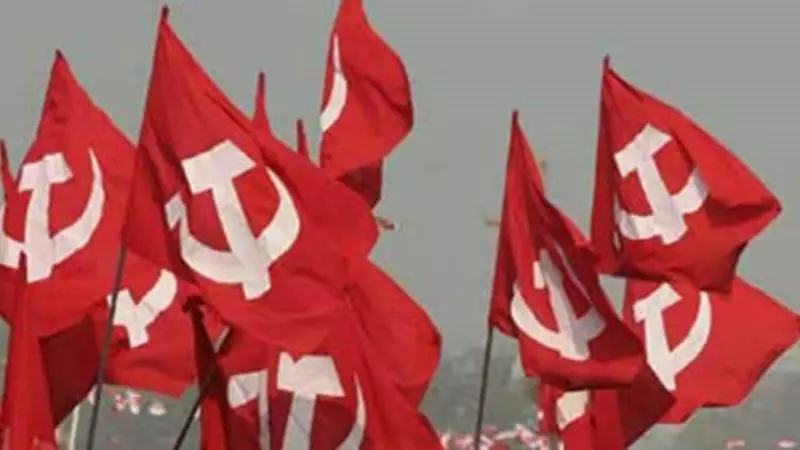
This year, 2025, marks a significant dual centenary in India's political history. Two organisations that have profoundly shaped the nation's modern trajectory – the Rashtriya Swayamsevak Sangh (RSS) and the Communist Party of India (CPI) – complete a hundred years. However, the contrast in their commemorations could not be more stark. While the RSS, now part of the establishment, celebrated with fanfare, the CPI's 100th year passed with little notice, its political influence a shadow of its former self. This silence raises a pivotal question: has Indian communism reached its political end, or is this merely another phase in its turbulent century-long journey?
From Political Peak to Precipitous Decline
The reversal of fortunes for Indian communism over the last two decades has been dramatic. In 2005, the Left was a formidable force. It wielded significant influence over the Congress-led UPA government at the centre, ruled West Bengal and Tripura with authority, and remained a powerful player in Kerala. The movement appeared poised for renewed national relevance.
This position was squandered in July 2008 when the Left withdrew support from the UPA and, in a controversial move, backed the BJP's attempt to topple the Manmohan Singh government. The political fallout was severe. Since then, the decline has been steep. From commanding around 60 Lok Sabha seats in 2004, Left parties now hold barely 10. Their national vote share has collapsed from approximately 8% to under 3%. Regionally, they have been ousted from power in both West Bengal and Tripura, retaining governance only in Kerala.

A Century of Ideological Churn and Lasting Impact
The story of Indian communism is older and richer than its recent electoral setbacks. Its origins are debated. The CPI(M) traces its founding to October 1920 in Tashkent, with a group including M.N. Roy. The CPI marks its birth at a December 1925 convention in Kanpur, organised by figures like Singaravelu Chettiar and S.A. Dange.
Beyond the date dispute, Indian communism emerged from the global upheaval after World War I. The crisis of capitalism, the Russian Revolution, and rising Asian nationalist movements created fertile ground for socialist and communist ideas. In India, the party drew strength from a remarkable convergence: Ghadar activists, associates of Bhagat Singh, Bengali revolutionaries, militant trade unionists, and radical peasant leaders.
Despite relentless colonial repression, the communists turned adversity into opportunity. The famous conspiracy trials of the 1920s became platforms to popularise Marxist ideas. By the 1930s and 40s, they had built an impressive network of mass organisations, giving them influence far beyond their numbers, especially among urban youth and intellectuals.
Enduring Tensions and Unfulfilled Potential
Despite India's democratic environment, the communist Left never realised its full potential. Its failures are often linked to an inability to adapt to seismic shifts: World War II's dynamics, the trauma of Partition, the Sino-Soviet split, and later, the rise of the BJP. A persistent difficulty in building durable coalitions with other democratic forces, including the Congress, proved equally damaging.
The movement struggled to reconcile core tensions: nationalism with internationalism, caste with class, revolutionary doctrine with parliamentary democracy, and ideological purity with pragmatic coalition-building. These unresolved conflicts repeatedly weakened it at critical junctures.
Yet, the imprint of communism on modern India is undeniable. It forced land reform onto the national agenda, reshaping rural power in several states. The Left emerged as a consistent defender of secularism and federalism. India's expansive welfare architecture bears the mark of sustained communist pressure. In culture, it transformed literature, theatre, and cinema, amplifying marginal voices and embedding rationalist values.

The Future: Irrelevance or Resurgence?
Today, the communist Left faces its gravest danger: prolonged political irrelevance. However, as analyst C. Raja Mohan argues, the conditions that once gave rise to the movement are sharper than ever. Deep inequality, agrarian distress, precarious labour, persistent feudal values, and global economic turbulence provide a potential base. There is also renewed global interest in socialist ideas, even in advanced economies, as seen in figures like New York's mayor.
The potential for a meaningful contribution to India's 21st-century evolution exists, but it hinges on critical changes. Indian communists must shed ideological rigidity and rediscover the art of building broad democratic and progressive coalitions. Uniting the fragmented communist and socialist groups under a single platform is an obvious, yet elusive, first step.
The centenary is not necessarily an obituary. Political ideas rarely die simply because their parties decline. The unfinished business of Indian communism – addressing the very inequalities it first rose to combat – suggests its long political journey may yet have new chapters to write.