In a significant political development, India's young population is increasingly stepping up to challenge the ruling Bharatiya Janata Party's (BJP) long-standing ambition to create an 'Opposition-mukt Bharat' (Opposition-free India). Through sustained protests, digital activism, and electoral participation, the youth are asserting their democratic rights and forcing a reckoning on issues ranging from unemployment to civil liberties.
Youth as a Counterweight to Political Consolidation
The Modi government, in power since 2014, has pursued strategies to weaken traditional opposition parties, including the use of investigative agencies, defections, and media pressure. However, as institutional opposition wanes, a new force has emerged: young Indians, particularly students and first-time voters, who are organizing independently to hold the government accountable.
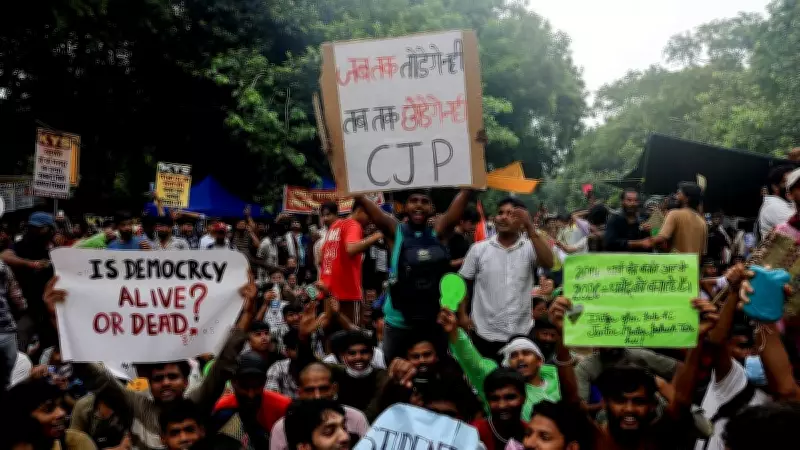
Recent campus protests against controversial policies and the arrest of student leaders have galvanized thousands across states like Bihar, Uttar Pradesh, and Delhi. Social media platforms have become arenas for debate and mobilization, with youth groups using hashtags and viral campaigns to bypass mainstream media narratives. According to analysts, this generational shift reflects a deeper desire for participatory democracy beyond electoral cycles.

Demographic Dividend Turned Democratic Force
India has one of the world's largest youth populations, with over 65% under the age of 35. This demographic dividend is now translating into political clout. In the 2024 general elections, voter turnout among 18–25-year-olds surged by 8% compared to 2019, with many casting ballots for smaller parties or independent candidates who emphasize accountability and transparency.
The government's attempts to curb dissent through measures like the Citizenship Amendment Act and farm laws backfired, sparking prolonged protests that drew millions of young people. The youth have also taken up issues such as climate change, gender justice, and economic inequality, often clashing with state authorities. As one student leader from Delhi University noted, 'We are not just voting—we are demanding a seat at the table.'
Digital Activism and the New Public Sphere
The rise of digital platforms has enabled youth to create alternative spaces for political dialogue. WhatsApp groups, Telegram channels, and Instagram pages are used to organize protests, share information, and debunk government propaganda. This has made it harder for the administration to control the narrative, as young Indians increasingly rely on peer-to-peer networks rather than traditional media.
However, this digital activism comes with risks. The government has intensified surveillance and cracked down on online dissent, with arrests under laws related to sedition and national security. Despite this, the youth continue to innovate, using encrypted apps and offline meetings to sustain their movements. 'The state may have more resources, but we have numbers and determination,' said a climate activist from Bengaluru.
Implications for India's Democratic Future
Analysts argue that the youth's engagement is reshaping India's democracy. By filling the void left by weakened opposition parties, they are preventing the complete erosion of checks and balances. The government, in turn, faces a paradox: while it seeks to centralize power, it must contend with a restless, connected generation that refuses to be silenced.
This democratic reckoning is not without challenges. The youth movement remains fragmented, often lacking clear leadership or policy alternatives. Yet, its very existence serves as a counterforce to authoritarian tendencies. As the country heads toward the next general election, the question is whether political parties will adapt to this new reality or face further marginalization.
In conclusion, India's youth are not merely participants in democracy—they are its reinvigorators. By forcing a reckoning on the government's 'Opposition-mukt' vision, they are ensuring that democracy remains a living, contested space rather than a hollow ritual.