Indira Gandhi's Historic Victory in 1966: A Tense Battle for Leadership
On January 19, 1966, the Central Hall of Parliament witnessed a historic event. This grand hall, where India's Constitution was adopted, saw the Congress Parliamentary Party hold its first full-fledged leadership contest since Independence. The result changed India's political landscape forever.
The Sudden Vacancy and Political Turmoil
India found itself without a Prime Minister after Lal Bahadur Shastri's sudden death in Tashkent earlier that month. Acting Prime Minister Gulzarilal Nanda took temporary charge, but the question of permanent leadership remained unresolved. The Congress party faced a critical decision about who would guide the nation forward.
Indira Gandhi's Political Journey
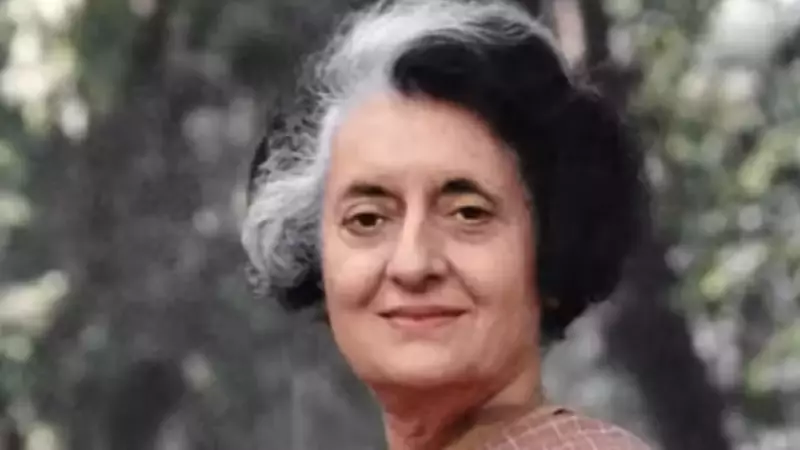
Indira Gandhi, the only daughter of Jawaharlal Nehru, had long operated in her father's shadow. She served as his companion during his premiership and later established herself as a political figure in her own right. Before the 1966 contest, she had experience as information minister under Shastri and as Congress president in 1960.

Powerful regional leaders threw their support behind her just days before the vote. Chief ministers from eleven of India's then sixteen states rallied to her cause. Nanda withdrew from contention, but Morarji Desai, the formidable former finance minister, refused to step aside.
The Battle Lines Are Drawn
Desai declared firmly, "Why should I form a separate party? I am a true Congressman and I will remain in the Congress." What many expected to be a smooth transition became one of the most bitterly fought leadership contests in India's parliamentary history.
Congress president K Kamaraj tried to avoid a contest, but Desai insisted on a ballot. He alleged "pressure" on MPs to back a particular candidate, arguing that chief ministers had "no business" imposing their preferences on the parliamentary party. Kamaraj countered that in a federal democracy, the views of states mattered significantly.
The Eve of Decision
On the eve of the vote, Desai told reporters that MPs were "not dumb cattle." He framed the battle as one between the party establishment and ordinary parliamentarians. He claimed to have proof of pressure tactics but declined to elaborate, fearing supporters might face victimization if he lost.
Delhi transformed into a political beehive as the vote approached. Chief ministers met with MPs from their states, while journalists camped outside the homes of Kamaraj, Desai, and Indira Gandhi.
The Dramatic Vote in Central Hall
On January 19, the Central Hall filled with 526 Congress MPs—a record turnout. Desai arrived first, greeting members with folded hands. Minutes later, Indira Gandhi entered, clad in a white sari with a light brown shawl. She approached Desai, said "namaste," and posed with him as photographers urged them to clasp hands.
The nominations made the contest clear. Desai was proposed by K Hanumanthaiya, while Indira Gandhi's name was proposed by acting Prime Minister Nanda and seconded by Sanjiva Reddy.
The Tense Count and Historic Result
Counting dragged through the afternoon, fueling tension and rumors. Four times there were false alarms about the result. Then, around 3 PM, the returning officer emerged with the announcement.
"I declare Mrs Gandhi elected."
The hall broke into thunderous cheers. The figures were emphatic: 355 votes for Indira Gandhi against 169 for Morarji Desai. She secured nearly 68% of valid votes—a two-thirds majority that even her supporters had scarcely dared hope for.
Aftermath and Reactions
Amid cheers, the two candidates shook hands and posed for press photographers and television crews. Outside Parliament House, crowds had gathered all day. When the result became known, they cheered as Gandhi proceeded to Rashtrapati Bhavan to meet President S Radhakrishnan and form a new government.

Desai pledged cooperation but added a pointed remark. He hoped that "at least in future, an atmosphere of fearlessness" would be created in party and country. At her first press conference, Indira Gandhi rejected any insinuation of foul play. She stated, "The insinuation that unfair play had a part in this election was unjustified," while agreeing that fearlessness in public life mattered greatly.
Reactions poured in across India and abroad:
- C Rajagopalachari suggested Gandhi might be more broad-minded and closer to Nehru's outlook than Desai.
- Women's groups celebrated the historic achievement.
- The Soviet news agency Tass flashed the news within minutes.
- Lord Mountbatten called her election one bound to have a stabilizing effect in India.
As Kamaraj told MPs that day, "We have elected Mrs Gandhi to take over the burden of the Prime Ministership of the country." The 1966 contest marked not just a personal triumph for Indira Gandhi, but a turning point for the Congress party and how succession battles would be fought within it.