Lucknow's newly inaugurated Rashtra Prerna Sthal has opened a museum that offers a deep dive into the lives of key nationalist leaders and the political journey of the Bharatiya Janata Party. The museum, which started welcoming visitors last week, is housed within the memorial complex that features towering 65-feet bronze statues of former Prime Minister Atal Bihari Vajpayee, Bharatiya Jana Sangh founder Syama Prasad Mookerjee, and ideologue Deendayal Upadhyaya.
Immersive Exhibits and Historical Narratives
Spread across two floors and a 6,300-square-meter area, the museum contains five galleries and twelve interpretation walls. Visitors can experience immersive audio-visual presentations, including one detailing Syama Prasad Mookerjee's staunch opposition to the Partition of Bengal. Another show highlights Atal Bihari Vajpayee's role in the Ram Temple movement. The museum meticulously charts the evolution of the Bharatiya Jana Sangh into the present-day BJP.
A particularly striking section is dedicated to Mookerjee's activism in Bengal and Jammu & Kashmir. A touch-screen table displays harrowing details of 'The Great Calcutta Killings' of August 1946 and the Noakhali-Tipperah tragedy. Text panels explain his principled resignation from Prime Minister Jawaharlal Nehru's cabinet in 1950, protesting the Nehru-Liaquat Pact which he believed would endanger Hindus in East Pakistan.

The Mystery Wall and Democratic Symbolism
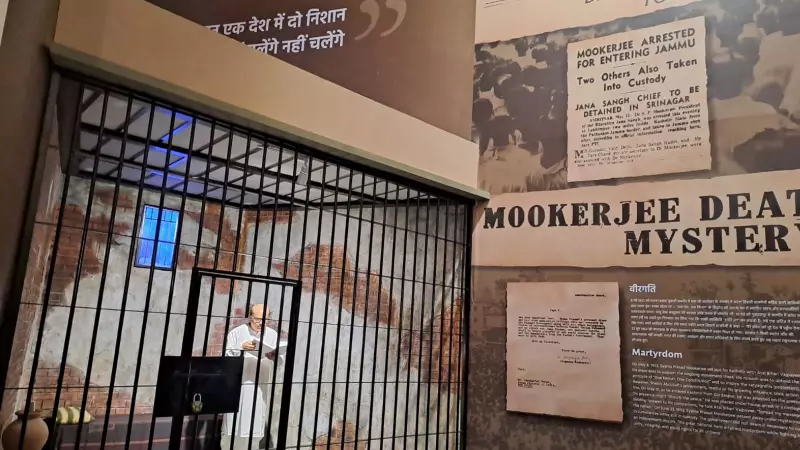
One entire wall is covered with news clippings probing Syama Prasad Mookerjee's "mysterious death" in 1953, while he was detained in Srinagar. Headlines from the era, such as "West Bengal demands inquiry into Dr Mookerjee's death," are displayed next to an installation depicting him behind bars.
In a poignant contrast, a simple yet powerful exhibit features a rusty brown ballot box, accompanied by a note that declares it a "powerful symbol of democracy." The note explains that this box once held votes that decided the fates of electoral candidates.
Chronicling the BJP's Political Ascent
The museum positions key events in the BJP's history as national milestones. Displays connect Vajpayee's 1992 speech in Lucknow about preparing the land in Ayodhya to the eventual construction of the Ram Temple. An audio-visual narrative states that after the BJP won an absolute majority in 2014 under Narendra Modi's leadership, the temple construction was completed in 2024, fulfilling Vajpayee's vision.
Further exhibits celebrate the party's governance, citing the abrogation of Article 370, surgical strikes against terrorism, and the development trajectory of Uttar Pradesh under Chief Minister Yogi Adityanath. The narrative concludes by asserting India's rising status as a world leader.
The museum, which charges an entry fee of Rs 50 per person, also screens orientation films on the lives of the three leaders in two dedicated rooms. Prime Minister Narendra Modi had inaugurated the memorial complex on December 25 last year, with the museum opening its doors recently.