

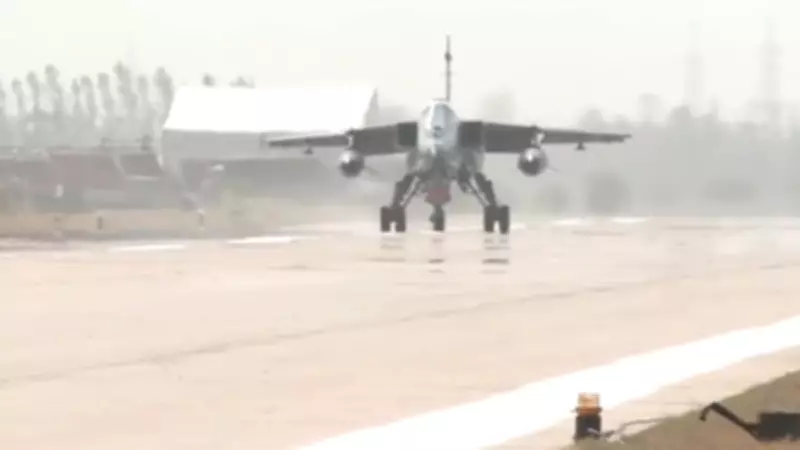
Jaguar Fighter Jet Executes Strategic Landing on Purvanchal Expressway in Sultanpur
In a remarkable display of military preparedness, an Indian Air Force (IAF) Jaguar fighter jet successfully landed on the Purvanchal Expressway in Sultanpur, Uttar Pradesh, on April 22, 2026. This high-stakes maneuver was part of a carefully orchestrated emergency landing drill, showcasing the IAF's capability to utilize national highways as makeshift airstrips during times of conflict or crisis.
Details of the Landing Drill
The exercise, which took place in the early hours, involved the Jaguar aircraft, a key component of India's fighter fleet known for its deep penetration strike capabilities. The Purvanchal Expressway, a major infrastructure project connecting Lucknow to Ghazipur, was temporarily closed to civilian traffic to ensure safety and security during the operation. Officials reported that the landing was executed flawlessly, with the jet touching down smoothly on the designated stretch of the highway.
This drill is part of a broader initiative by the IAF to enhance operational flexibility and readiness. By practicing landings on highways, the force aims to simulate real-world scenarios where traditional airbases might be compromised or inaccessible due to enemy action or natural disasters. The exercise also tested the coordination between the IAF, local authorities, and highway management teams to ensure swift and efficient execution.

Strategic Importance and Historical Context
The use of highways as emergency runways is not new to India's defense strategy. Similar drills have been conducted in the past on other expressways, such as the Yamuna Expressway and the Agra-Lucknow Expressway, as part of the IAF's ongoing efforts to bolster its contingency plans. This practice aligns with global military trends where nations leverage civilian infrastructure for defense purposes, enhancing resilience in asymmetric warfare environments.
The Jaguar fighter jet, a twin-engine aircraft manufactured by Hindustan Aeronautics Limited (HAL) under license from British Aerospace, has been a mainstay in the IAF since the 1980s. It is renowned for its ability to operate in diverse conditions, making it an ideal candidate for such unconventional landing exercises. The successful drill underscores the aircraft's reliability and the skill of IAF pilots in handling complex maneuvers.
Implications for National Security and Infrastructure
This event highlights several key aspects of India's defense and infrastructure policies:
- Enhanced Military Readiness: The drill demonstrates the IAF's proactive approach to adapting to evolving security threats, ensuring that forces remain agile and capable of rapid deployment.
- Infrastructure Dual-Use: It showcases how civilian projects like the Purvanchal Expressway can serve dual purposes, supporting both economic growth and national security in emergencies.
- Public Awareness and Safety: Authorities emphasized that such exercises are conducted with stringent safety protocols, minimizing disruption to public life while maintaining operational secrecy.
In conclusion, the landing of the Jaguar fighter jet on the Purvanchal Expressway marks a significant milestone in India's defense preparedness. As geopolitical tensions continue to shape global dynamics, such drills reinforce the country's commitment to safeguarding its airspace and leveraging all available resources for strategic advantage. The IAF plans to conduct more of these exercises in the future, further integrating highway networks into its operational framework.






