

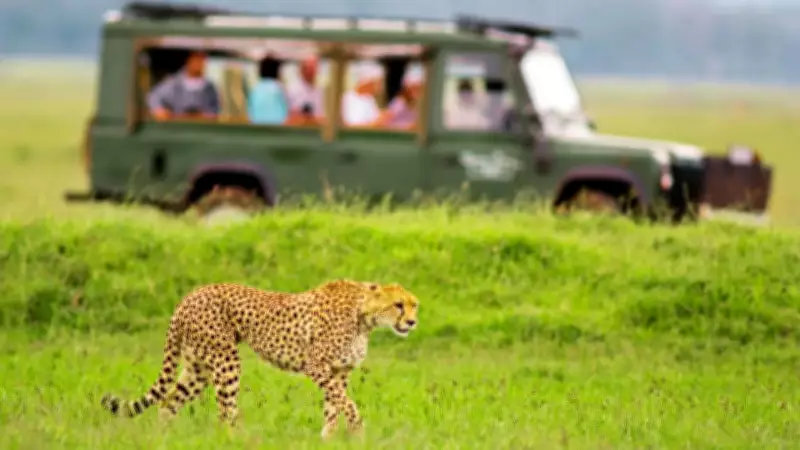
For a very long time, luxury travel was primarily defined by opulent resorts, 'Maharaja style' experiences, fine dining, and impeccable service. While these elements remain significant, today's affluent travelers increasingly seek more meaningful journeys. They desire immersive experiences that create lasting memories rather than merely offering comfort. Consequently, luxury is no longer measured solely by thread counts or infinity pools but by the uniqueness of experiences a destination provides.
Rajesh Choudhary, an investment banker and avid wildlife enthusiast, embodies this evolving mindset. Even when traveling for work, he prefers staying at resorts over conventional business hotels, despite their distance from business centers. "I find business hotels cold and claustrophobic," he says. "I look for experiences that stay in my heart as treasured memories, and that's exactly what a safari offers." According to Choudhary, "One of the greatest attractions of wildlife travel is its unpredictability. Unlike traditional luxury holidays, where every detail is planned and controlled, safaris offer an element of surprise that keeps travelers engaged. Every safari is different. The experience of watching a herd of elephants in Sri Lanka is completely different from seeing them in Africa. Every jungle offers something unique, something you carry with you forever."
The Rise of Authentic Wildlife Tourism
There is a growing appetite for authentic experiences, fueling interest in wildlife tourism worldwide, particularly African safaris. While India's forests are famous for tigers, leopards, and abundant biodiversity, Africa presents a completely different ecology. From landscapes to animals, Africa offers something distinct. For many modern travelers, luxury now lies in witnessing nature at its most spectacular: hearing the distant roar of a lion at dusk or watching wildlife move freely across endless plains. These are experiences no resort, however luxurious, can replicate, making them invaluable.

"In today's world where luxuries and comforts have been easily available and accessible for many, the quest is for something more adventurous and exhilarating. While conventional holiday trips provide all the comforts of luxurious accommodation, good food, and well-planned itineraries, what sets safari holidays apart is the awe-inspiring beauty of nature in its untouched form. For Indian tourists who have enjoyed beachside fun in the Maldives, shopping extravaganzas in Dubai, the rich cultural heritage of Europe, or relaxing getaways in Southeast Asia, Africa is another entirely different adventure that needs to be experienced at least once. This holiday isn't just about enjoying a leisurely vacation; it is about venturing into one of the world's last frontiers, which can be accomplished through a safari in Africa. And one of the most fascinating features of this tour is the Great Migration," says Rishen Patel, Founder and Managing Director of Delaware Investment Limited.
Unique Attractions of African Safaris
Home to the Big Five: The continent is home to the famed Big Five—lion, leopard, elephant, rhinoceros, and buffalo—a concept that continues to draw wildlife enthusiasts globally. Few natural spectacles compare to the Great Migration, when millions of wildebeests and zebras surge across East African plains seeking fresh grazing.
The Great Migration: In East Africa, it is the most famous, but many safari areas also have seasonal movements based on rainfall, river levels, and grazing patterns, so wildlife experiences change month to month.
Spectacular Landscapes: African safaris stretch across vast savannahs, deserts, marshes, river systems, and volcanic highlands, providing magnificent settings for wildlife viewing. The open terrain allows visitors to observe animal behavior in extraordinary detail—be it a lion chase, a cheetah sprint, or elephants congregating around a watering hole—unlike the deep woods of India or Southeast Asia.

Night and Walking Safaris: Many private reserves in Africa offer guided night safaris, revealing nocturnal species and behaviors such as genets, civets, porcupines, bush babies, hyenas, and hunting predators. Unlike vehicle-only tourism, some destinations offer guided walking safaris, shifting focus from photography to tracking, bird calls, spoor, plants, insects, and ecosystem subtleties.
Luxury as Part of the Experience: One of the most alluring aspects of a safari is that luxury forms an essential part of the wildlife experience. Several resorts across Africa offer complete packages, making the experience truly holistic.
Fewer Manufactured Attractions: The core attraction is usually what nature chooses to reveal that day. That unpredictability—waiting, tracking, missing sightings, then suddenly finding a leopard or wild dog pack—is central to the safari experience.
Birdlife as a Major Draw: Iconic mammals dominate marketing, but African safari regions also support extraordinary bird diversity, attracting serious birders and general wildlife travelers alike.
The Serengeti Advantage
"Although the migration takes place in the Serengeti of Tanzania and the Masai Mara in Kenya, it is worth noting that the migration spends most of its annual cycle in the Serengeti region. Travelers thus have access to a more extensive period to plan their trip and witness the migration at different points of its cycle, from calving to herd movement and river crossings. Therefore, the Serengeti can be called not just the biggest ground for the Great Migration but also the best spot to witness it. In addition, the vastness of Serengeti is one of its most defining features," says Rishen Patel.
Africa vs. India or Sri Lanka
There is no comparison between the jungles of South Asia and Africa. From vegetation and landscape to animals and climate, the difference is palpable. The comparison is disadvantageous to both. For example, staying at a resort in the rice fields of Jetwing Kaduruketha in Sri Lanka's Uva Province, experiencing aromatic rice cooked with local cashew curry, and plucking jackfruit straight from the orchard cannot be pitted against Africa's zebra experience. India and Sri Lanka offer multitudes of experiences alongside wilderness; Africa offers an intense and surprising experience. It is this difference that makes it the new attraction.





