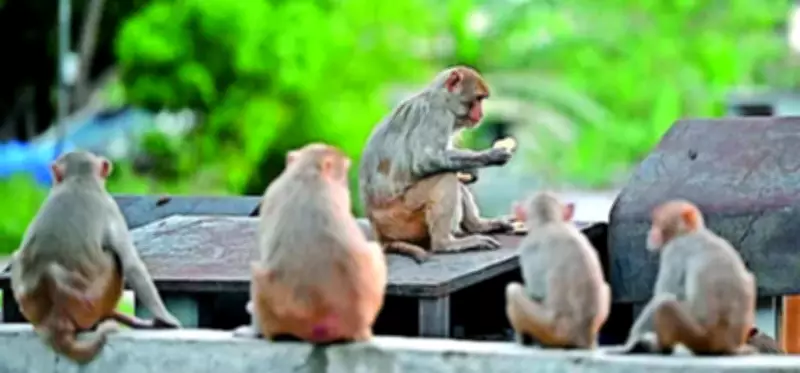
Jammu & Kashmir Government Rules Out Monkey Sterilization Drive Despite Widespread Crop Destruction
The Jammu and Kashmir government has officially informed the legislative assembly that it will not be launching a sterilization program to control the burgeoning monkey population, even as the simian menace continues to devastate agricultural lands across the Jammu region. This decision comes amid mounting pressure from legislators and farmers who are grappling with significant crop losses and threats to public safety.
Alternative Strategies to Combat the Simian Threat
While rejecting the sterilization approach, the government outlined a comprehensive series of alternative measures designed to mitigate the damage. These initiatives include actively encouraging farmers to transition to monkey-resistant crops such as turmeric, ginger, and lemongrass. Additionally, the promotion of boundary plantations using crops like ladyfinger is being emphasized as a natural deterrent.
Further steps involve advocating for the installation of solar-powered fencing around fields, the deployment of specialized monkey-deterrent devices, and public awareness campaigns urging residents to stop feeding the animals, which inadvertently attracts larger populations to human settlements.

Legislators Voice Constituents' Plight and Demand Action
The issue was brought to the forefront in the assembly by BJP MLA from Nagrota, Devyani Rana, who highlighted the severe impact on her constituency. She reported that monkeys are not only ravaging crops but also posing an increasing danger to public safety. Rana strongly advocated for a multi-pronged strategy encompassing sterilization, relocation of monkey troops, financial compensation for affected farmers, and robust preventive interventions.
"While crop diversification is a sound long-term agricultural policy, expecting farmers to bear the entire cost of this transition without institutional support is unrealistic," Rana argued. She cited international and domestic expertise, stressing that "for sterilization to have a measurable demographic impact, it must be implemented on a large scale, conducted continuously, and be professionally monitored. Sporadic, one-off efforts yield negligible results."
Scale of the Damage and Warnings of Escalation
Official data presented during the session reveals the alarming scale of the problem. In Nagrota constituency alone, approximately 2,200 hectares of agricultural land, including valuable fruit orchards, have suffered damage due to monkey activity.
Echoing these concerns, BJP MLA Pawan Gupta from Udhampur West issued a stark warning about the consequences of government inaction. "Failure to initiate a monkey sterilization program will lead to a serious crisis in Jammu," Gupta stated. He revealed that thousands of kanals of land in his constituency remain uncultivated because farmers are too fearful of simian raids to plant crops.
"The situation is dire. Even at my own residence in Udhampur, we see gatherings of 40 to 50 monkeys every evening. Contrary to the behavior of most animals, these monkeys remain highly active after dusk," Gupta added. He urged for their relocation back to forested areas and cautioned that without decisive action, more farmers would be forced to abandon agriculture altogether, exacerbating the region's economic challenges.
The government's current stance sets the stage for continued debate, as legislators and the agricultural community weigh the effectiveness of alternative deterrents against the persistent and growing threat posed by the monkey population to Jammu's food security and rural livelihoods.