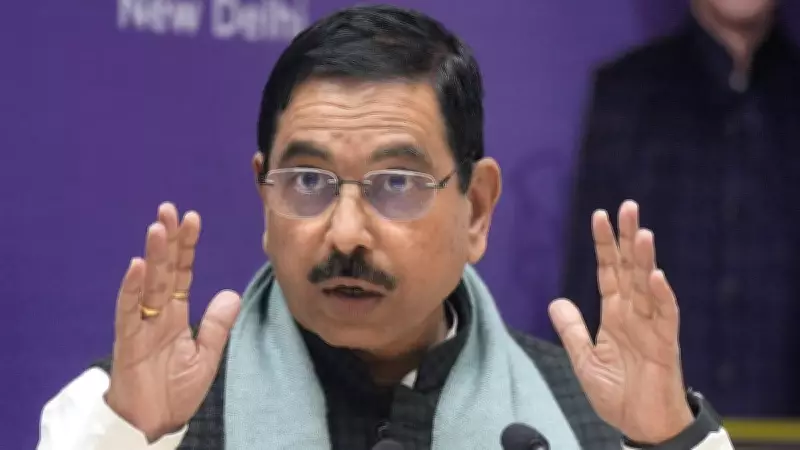
Union Minister Pralhad Joshi Denounces Mallikarjun Kharge's Controversial Remarks on RSS and BJP
In a sharp rebuke, Union Minister Pralhad Joshi has labeled Congress President Mallikarjun Kharge's recent statements regarding the Rashtriya Swayamsevak Sangh (RSS) and the Bharatiya Janata Party (BJP) as "childish". The condemnation follows a speech by Kharge that has sparked significant controversy across political circles in India.
Kharge's Alleged 'Poisonous Snakes' Comment Draws Widespread Criticism
During his address, Mallikarjun Kharge reportedly described the RSS and BJP as "poisonous snakes" and called for them to be "killed". This inflammatory rhetoric has ignited a firestorm of debate, with many accusing the Congress chief of using divisive language that undermines democratic discourse. Joshi, in his response, emphasized that such remarks are not only irresponsible but also detrimental to the political environment, urging leaders to engage in more constructive dialogue.
Joshi's Strong Condemnation and Call for Mature Politics
Pralhad Joshi, a prominent BJP leader, did not mince words in his criticism. He stated that Kharge's comments reflect a lack of maturity and are unbecoming of a national political figure. Joshi highlighted the importance of respectful political engagement, especially in a diverse democracy like India, where ideological differences should be addressed through debate rather than vitriol. He further asserted that the RSS and BJP have always worked for the nation's development and such baseless attacks only serve to polarize society.

Background and Implications of the Controversy
This incident adds to the ongoing tensions between the Congress and BJP, two major political parties in India. Key points to note include:
- The speech was delivered on April 8, 2026, as reported by DHNS, and has since gained widespread attention.
- Kharge's remarks have been interpreted by some as a call to violence, raising concerns about political rhetoric escalating into real-world conflicts.
- Joshi's response underscores the BJP's strategy to portray the Congress as resorting to negative campaigning, potentially influencing public opinion ahead of future elections.
As the story develops, it remains to be seen how this controversy will impact the political landscape, with both parties likely to use it as a rallying point for their respective bases. The call for "killing" political opponents, even metaphorically, sets a dangerous precedent that could further erode civility in Indian politics.