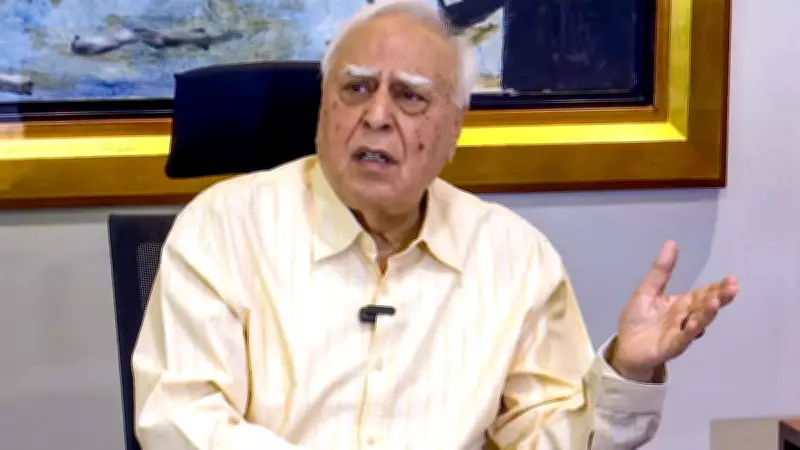
Senior politician and former Union minister Kapil Sibal has launched a pointed critique of the current government's decision-making processes, particularly in light of the ongoing controversy surrounding the University Grants Commission (UGC). Speaking on the matter, Sibal asserted that the government's consistent approach of not consulting stakeholders is evident in every major decision it makes, which he believes undermines democratic principles and inclusive governance.
Government's Unilateral Decision-Making Under Fire
Kapil Sibal highlighted that the pattern of avoiding consultations has become a hallmark of the current administration's policy formulation. He argued that this tendency is not isolated but reflects a broader systemic issue where diverse perspectives are sidelined. The UGC row, which involves significant changes in higher education policies, serves as a recent example where stakeholders, including academicians and students, were allegedly not adequately consulted before implementing reforms.
Embracing India's Diversity as a Governance Advantage
In his remarks, Sibal emphasized the importance of leveraging India's rich diversity as a strategic advantage in governance. He stated, "This is such a diverse country that diversity should be taken to be an advantage because it allows for a consideration of the concerns of every section of society." By acknowledging and incorporating the varied needs and viewpoints of different communities, Sibal believes that policies can become more equitable and effective, fostering greater social harmony and national progress.

Implications for Higher Education and Beyond
The UGC controversy has sparked widespread debate over the autonomy and direction of India's higher education sector. Sibal's comments underscore concerns that unilateral decisions could lead to policies that do not fully address the complexities of India's educational landscape. He called for a more collaborative approach, where consultations with experts, institutions, and the public are prioritized to ensure that reforms are well-rounded and sustainable.
Overall, Kapil Sibal's critique serves as a reminder of the critical role that inclusive decision-making plays in a democracy like India. As the government navigates various challenges, including those in education, his advocacy for embracing diversity and fostering dialogue highlights pathways toward more resilient and representative governance.