

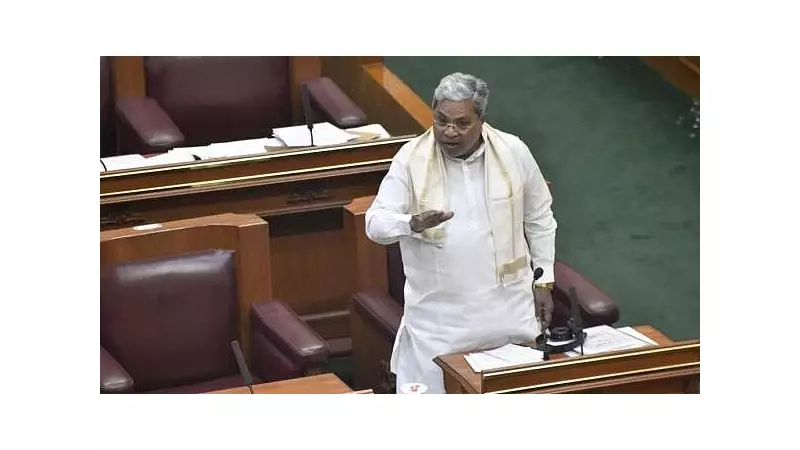
Karnataka Chief Minister Cites Constitutional Basis for State Guarantee Schemes
Karnataka Chief Minister Siddaramaiah has strongly defended the state's guarantee schemes, asserting they are firmly aligned with the foundational values of the Indian Constitution. In a significant statement, he emphasized that these welfare initiatives are not merely political promises but are rooted in constitutional empowerment granted to governments.
Article 15(3) as the Legal Foundation
The Chief Minister specifically pointed to Article 15(3) of the Indian Constitution as the legal bedrock for these programs. He explained that this constitutional provision explicitly empowers both state and central governments to create special provisions for the protection and advancement of women and children. This constitutional mandate, according to Siddaramaiah, provides the necessary and legitimate basis for implementing various social welfare schemes across the state.
"The Constitution itself gives us the authority to make special provisions for women and children. This is not an act of favoritism but a duty enshrined in our supreme law," the Chief Minister stated, highlighting the legal rationale behind the government's approach.

Direct Reference to Flagship Programs
Siddaramaiah directly linked this constitutional interpretation to two of Karnataka's most prominent guarantee schemes:
- Gruha Lakshmi: A financial assistance scheme aimed at supporting women heads of households.
- Shakti: A scheme providing free travel for women in state-run public transport buses.
He argued that these initiatives are practical manifestations of the constitutional principle allowing for positive discrimination to achieve substantive equality. The schemes are designed to address specific socio-economic challenges faced by women, thereby operationalizing the constitutional vision of social justice.
Broader Implications for Welfare Governance
This articulation by the Chief Minister places the state's guarantee schemes within a broader framework of constitutional governance. It positions these welfare measures as:
- Legal obligations derived from constitutional provisions.
- Essential tools for achieving gender equality and child welfare.
- Legitimate exercises of state power for social empowerment.
The statement serves to reinforce the government's position that its welfare agenda is constitutionally sanctioned, potentially strengthening its defense against any legal or political challenges. It also underscores a governance philosophy that views welfare schemes as integral to fulfilling constitutional promises made to citizens, particularly vulnerable groups.
This development highlights the ongoing intersection of constitutional law, political policy, and social welfare in Karnataka's governance model, with the Chief Minister framing guarantee schemes as both a political commitment and a constitutional imperative.






