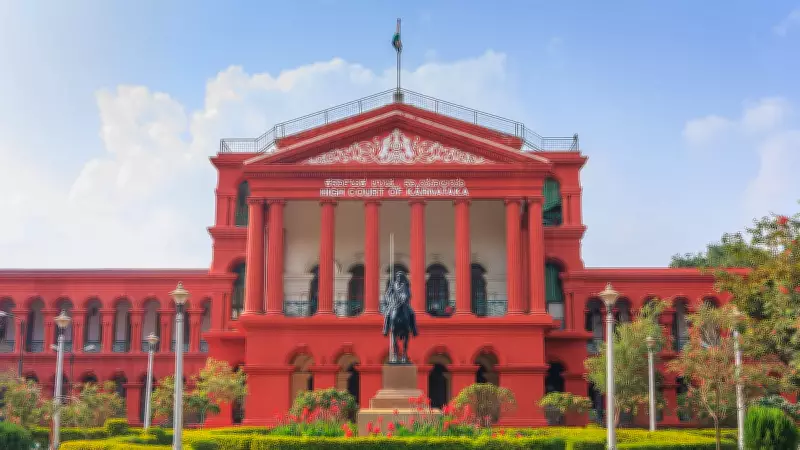
The Karnataka High Court has ruled that the length of imprisonment alone cannot be considered a sufficient ground for granting parole to a convict. The court emphasized that parole decisions must be based on a holistic assessment of multiple factors, including the conduct of the prisoner, the nature of the offense, and the likelihood of reoffending.
Background of the Case
The ruling came in response to a petition filed by a convict who had been incarcerated for approximately 14 years. The petitioner argued that his prolonged imprisonment warranted parole, and he sought the court's intervention after his earlier application was rejected by prison authorities.
In 2020, the high court had directed the prison authorities to reconsider the petitioner's application for parole. However, the authorities again declined to grant parole, prompting the petitioner to approach the court once more.

Court's Observations
Justice B. Veerappa, presiding over the case, observed that while the length of imprisonment is a relevant factor, it cannot be the sole basis for granting parole. The court noted that parole is a privilege, not a right, and must be granted only after a thorough evaluation of the prisoner's behavior, the circumstances of the crime, and the potential risk to society.
The judge further stated that the purpose of parole is to reform prisoners and reintegrate them into society gradually. Therefore, decisions on parole should not be mechanical but should be tailored to individual cases.
Implications of the Ruling
The ruling sets a precedent for parole considerations in Karnataka and potentially across India. It underscores that judicial and administrative authorities must consider a range of factors beyond the duration of imprisonment when evaluating parole applications.
Legal experts have welcomed the decision, stating that it reinforces the principle of individualized justice. They argue that parole decisions should be based on evidence of rehabilitation and the likelihood of the convict leading a law-abiding life upon release.
Reaction from the Petitioner
The petitioner's legal counsel expressed disappointment with the ruling but acknowledged the court's reasoning. The convict remains in custody, and his legal team is exploring further legal options, including a possible appeal to a higher court.
Conclusion
The Karnataka High Court's ruling clarifies that parole cannot be granted solely on the basis of the length of imprisonment served. The decision emphasizes the need for a comprehensive assessment of each case, balancing the interests of justice, rehabilitation, and public safety.