

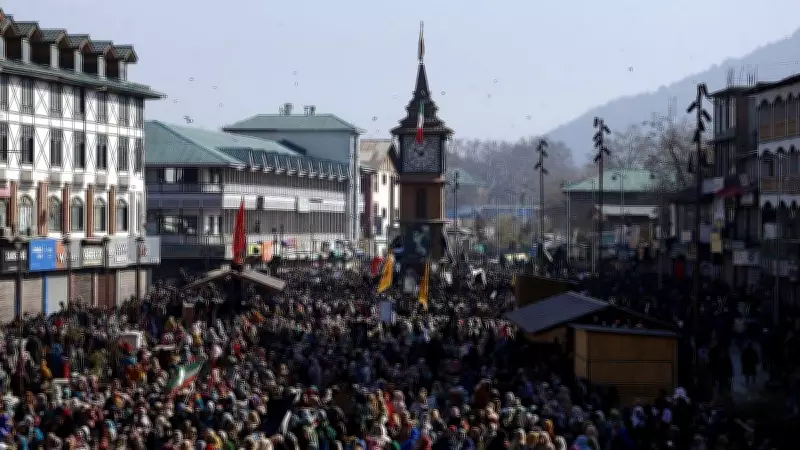
Kashmir Witnesses Return of Rare Street Protests After Iran's Khamenei Killing
In a notable development, the streets of Kashmir have seen the resurgence of rare public protests following the reported killing of Iran's Supreme Leader, Ayatollah Ali Khamenei. This mobilization marks a significant shift, as such demonstrations, along with stone-pelting and hartals, had largely vanished from daily life in the Valley since 2019.
Historical Context of Protests in Kashmir
For years, street protests, stone-pelting incidents, and hartals were routine features in Kashmir, often reflecting political unrest and public dissent. However, since 2019, these activities have dramatically decreased, making the recent protests particularly noteworthy. The return of such public gatherings highlights underlying tensions and the impact of international events on local dynamics.
Details of the Recent Demonstrations
The protests erupted in response to the killing of Iran's Supreme Leader, Ayatollah Ali Khamenei, indicating how global incidents can resonate in regions like Kashmir. Participants gathered in various parts of the Valley, voicing their sentiments through demonstrations that included slogans and symbolic actions. This event underscores the interconnectedness of international affairs with local political climates.

Significance of the Mobilization
The significance of Sunday's mobilization lies in its rarity post-2019. With street protests having become infrequent, this event draws attention to potential shifts in public expression and political engagement in Kashmir. Analysts suggest it could signal a reawakening of protest culture or a response to specific triggers, such as the Iran incident.
Broader Implications for Kashmir
This development raises questions about the future of public dissent and stability in Kashmir. While the protests are currently linked to an external event, they may reflect deeper socio-political undercurrents. Observers are closely monitoring whether this marks a temporary reaction or the beginning of a renewed phase of activism in the region.
In summary, the rare return of street protests in Kashmir following the killing of Iran's Khamenei serves as a poignant reminder of the region's volatile history and its sensitivity to global events. As the situation evolves, it will be crucial to watch how local authorities and communities respond to this resurgence of public mobilization.






