

Kejriwal and Sisodia Escalate Legal Battle to Supreme Court
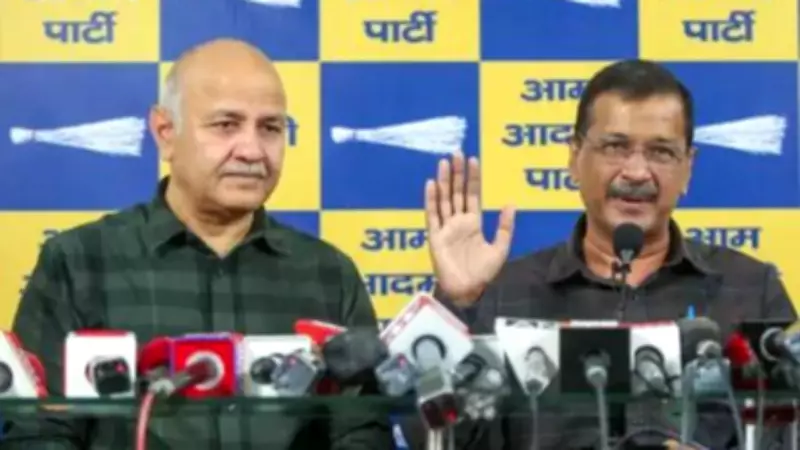
The Aam Aadmi Party (AAP) announced on Sunday that its convener, Arvind Kejriwal, and senior leader Manish Sisodia have approached the Supreme Court. This move comes after the Chief Justice of the Delhi High Court rejected their request to transfer the Central Bureau of Investigation's (CBI) plea against their discharge in the excise policy case from the bench of Justice Swarana Kanta Sharma to another judge.
Delhi High Court Chief Justice Declines Transfer Request
According to news agency PTI, Delhi High Court Chief Justice D K Upadhyaya declined the request made by former chief minister Kejriwal and other accused to transfer the matter on the administrative side. Sources cited by PTI indicated that the Chief Justice took the view that Justice Swarana Kanta Sharma was hearing the CBI's petition in line with the roster allocation, and there was no reason to pass an order of transfer.
The development occurs just one day before the CBI's petition challenging the discharge order is scheduled to come up for hearing before Justice Sharma. Following the rejection, the AAP stated that Kejriwal and Sisodia have challenged this decision in the Supreme Court, marking a significant escalation in their legal defense.

Background: Why Kejriwal Sought Transfer
On March 11, Kejriwal, Sisodia, and other accused in the excise policy case submitted a representation to the Delhi High Court Chief Justice. They sought the transfer of the CBI's plea from Justice Sharma to another judge they described as "impartial." In his representation, Kejriwal expressed a "grave, bona fide, and reasonable apprehension" that the hearing would not be impartial and neutral.
The CBI has moved the Delhi High Court against the order of the trial court that discharged Kejriwal and other accused in the excise policy case. This legal maneuver by the investigative agency has prompted a robust response from the AAP leaders, who are now taking their concerns to the highest court in the land.
Key Events in the High Court
While issuing notice to all 23 accused, including Kejriwal, Justice Swarana Kanta Sharma observed that certain findings and observations made by the trial court at the stage of framing charges prima facie appeared erroneous and required consideration. This observation appears to have triggered the apprehension raised by the AAP leaders.
Earlier, Kejriwal's representation argued that the high court, at the very first short hearing on March 9, not only issued notice but also, ex parte and without hearing the discharged accused, recorded a prima facie view that the trial court's detailed order was "erroneous." The representation also objected to the high court staying the trial court's directions and observations against the investigating officer, including proposed departmental action, without spelling out the specific perversity that justified such interim interference.
According to the representation, such relief at the threshold stage and without hearing the discharged accused strengthened the apprehension that the revision plea may not be heard with the required judicial detachment. This has led to a contentious legal standoff, with the AAP leaders asserting their right to a fair trial.
Trial Court's Discharge Order and Subsequent Developments
Arguments on charges in the excise policy case began in December 2025, and on February 27, the special CBI court passed a detailed order discharging Kejriwal, Sisodia, AAP Rajya Sabha MP Sanjay Singh, and all other accused in the matter. Kejriwal had been arrested in June 2024 in connection with the case and chargesheeted in July 2024, making this a prolonged legal battle with significant political implications.
The CBI's petition challenging the discharge is now listed for hearing before Justice Swarana Kanta Sharma on Monday. However, with the Supreme Court intervention sought by Kejriwal and Sisodia, the proceedings may face further delays or modifications, adding another layer of complexity to this high-profile case.
This legal saga underscores the intense scrutiny and procedural challenges faced by political figures in India's judicial system, with the AAP leaders vigorously defending their positions against what they perceive as biased proceedings.






