

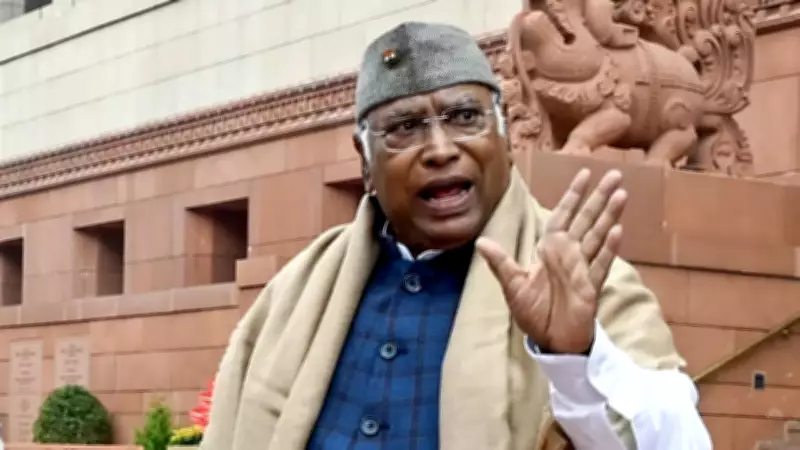
Congress President Questions Government's Approach to India-US Trade Deal Announcement
Congress president Mallikarjun Kharge has raised significant concerns regarding the manner in which the India-United States trade agreement was recently announced. In a strongly worded statement issued on Wednesday, Kharge criticized the Narendra Modi-led government for failing to consult Parliament or inform the public about the details of this crucial international agreement, despite the House being actively in session.
Contrasting Approaches to International Agreements
In his social media post, Kharge highlighted the longstanding strategic partnership between India and the United States, which has been built upon shared democratic values over several years. He specifically pointed to the Indo-US civil nuclear agreement signed during former prime minister Dr. Manmohan Singh's tenure as a model of transparent governance.
"The Congress-led UPA government maintained complete parliamentary oversight at every stage while finalizing that landmark nuclear deal," Kharge emphasized. "This stands in stark contrast to the current situation where the country remains largely uninformed about the specifics of this new trade agreement."

Key Concerns Raised by Opposition Leader
The Congress president articulated three primary areas of concern that he believes require immediate clarification from the government:
- Potential Compromises: Whether India made any concessions under pressure from the United States during negotiations
- Tariff Implications: Whether New Delhi agreed to eliminate tariffs on American imports as suggested by US President Donald Trump
- Agricultural Impact: How the deal affects Indian farmers and whether the agriculture sector has been opened to US products
Kharge noted that Prime Minister Modi's public response focused exclusively on thanking President Trump for reducing tariffs on Indian goods to 18 percent, without providing any substantive details about the agreement's broader implications.
Energy Security and Russia Relations
Beyond trade specifics, the Congress leader raised additional questions about potential impacts on India's energy security and foreign relations. He specifically inquired whether the agreement includes provisions that would require India to cease oil purchases from Russia, and what communication, if any, has been shared with Russian authorities regarding this matter.
"Parliament and the 140 crore citizens of India have a fundamental right to know the complete details of this agreement," Kharge asserted in his statement.
Government's Defense and Political Context
The questions emerge amid growing political debate surrounding the India-US trade framework, which includes Washington's commitment to lower tariffs on Indian exports from significantly higher levels to 18 percent. While the agreement has been announced at a framework level, numerous specifics remain undisclosed to the public.
Defending the government's position in the Lok Sabha, Union Commerce and Industry Minister Piyush Goyal stated that India had successfully protected sensitive sectors, particularly agriculture and dairy, following nearly a year of negotiations. He emphasized that discussions had been ongoing since Prime Minister Modi's visit to the United States in February 2025, resulting in what he described as a balanced and mutually beneficial outcome.
"Energy security remains an absolute priority for our government," Goyal affirmed during parliamentary proceedings.
Escalating Political Confrontation
The controversy has intensified with Congress leader Rahul Gandhi launching a direct attack on Prime Minister Modi, alleging that the Prime Minister was "under pressure" and had been "compromised" during the deal's finalization. The opposition party has formally demanded that the complete details of the trade agreement be presented before Parliament, with particular emphasis on agricultural provisions, tariff structures, and implications for India's oil procurement from Russia.

This developing situation underscores the ongoing tension between the government and opposition regarding transparency in international negotiations, setting the stage for further parliamentary discussions as more details about the India-US trade agreement emerge.





