Congress President Kharge Raises Concerns Over Women's Reservation Law Implementation
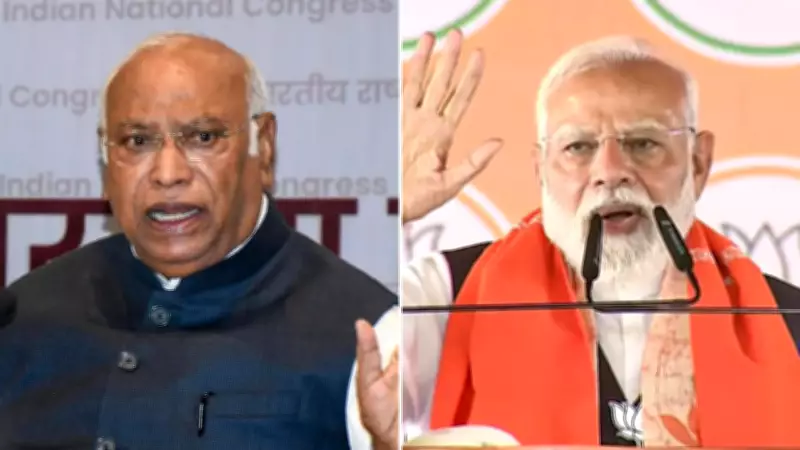
Congress President Mallikarjun Kharge has formally written to Prime Minister Narendra Modi, expressing significant concerns regarding the Central government's approach to discussions surrounding delimitation connected to the women's reservation legislation. In his detailed correspondence, Kharge has strongly advocated for a more comprehensive and inclusive political dialogue on this critical matter, specifically requesting that such discussions be scheduled after the conclusion of the ongoing assembly elections.
Opposition Demands Post-Election Consultations
Kharge has explicitly reiterated the Opposition's unified demand for convening an all-party meeting to thoroughly deliberate on the delimitation issue. He has proposed that this crucial meeting should take place after April 29, 2026, following the completion of the current electoral cycle. This position comes as a direct response to the government's recent announcement of a special parliamentary sitting scheduled from April 16 to 18, which is intended to discuss amendments related to the Nari Shakti Vandan Adhiniyam.
"I have just received your letter regarding the special session of Parliament for discussing the Nari Shakti Vandan Adhiniyam starting April 16," Kharge wrote in his communication. "This special sitting has been convened without taking us into confidence, and your government is once again seeking our cooperation while withholding crucial details about the impending delimitation process."

Lack of Transparency in Delimitation Details
The Congress leader emphasized the practical impossibility of conducting meaningful discussions without access to essential information. "You will appreciate that without specific details regarding the delimitation and other related aspects, it would be fundamentally impossible to engage in any productive or useful discussion concerning this historic legislation," Kharge asserted in his letter.
Furthermore, Kharge has directly challenged the government's assertion of having conducted prior consultations with political parties on this matter. "You mention in your correspondence that your government has engaged in dialogue with political parties regarding this issue. However, I am pained to point out that this claim contradicts reality, as all Opposition parties have consistently urged the Government to organize an All-Party meeting after the current election cycle concludes on April 29th, 2026, to discuss the contemplated constitutional amendments," he stated unequivocally.
Criticism of Special Session Timing
Kharge has also raised serious objections regarding the timing of the announced special parliamentary session, noting that it coincides directly with ongoing state elections. "The decision to call a special sitting during active state elections only reinforces our conviction that your government is rushing the implementation of this bill primarily for political advantage rather than genuinely empowering women," he wrote, highlighting concerns about potential electoral motivations overshadowing substantive policy implementation.
Call for Inclusive Democratic Process
In his concluding remarks, Kharge firmly reiterated the Opposition's collective position on the matter. He emphasized that if the government is genuinely committed to strengthening democratic institutions and "moving forward together, taking everyone along," it should demonstrate this commitment by convening a comprehensive all-party meeting after April 29. This meeting would specifically address the complex delimitation process that is intrinsically linked to the amendments under the women's reservation law, ensuring broader consensus and more effective implementation.
The letter represents a significant political development in the ongoing debate surrounding women's political representation in India, highlighting tensions between the ruling government and opposition parties regarding procedural transparency and inclusive decision-making processes in parliamentary matters of national importance.