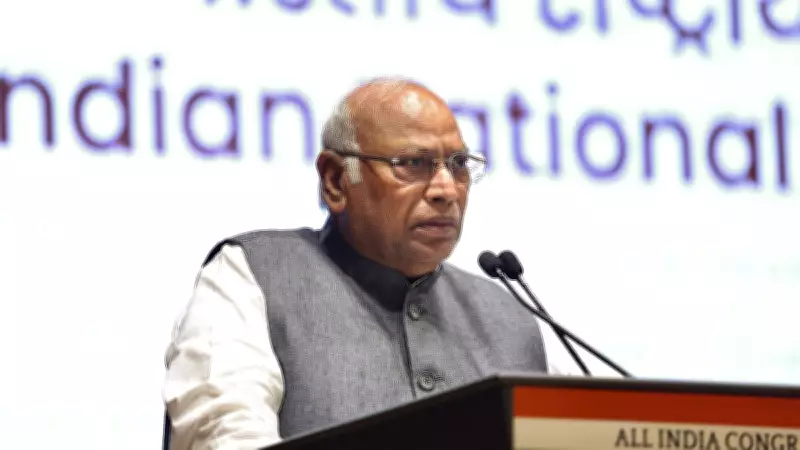
Congress president Mallikarjun Kharge on Tuesday launched a scathing attack on the Bharatiya Janata Party-led government at the Centre, asserting that the findings of the National Family Health Survey-6 (NFHS-6) have unmasked the "absolute incompetence" of the ruling party. Speaking at a press conference in New Delhi, Kharge highlighted that the survey data reveals a grim picture of India's health and nutrition indicators, contradicting the government's claims of progress.
Key findings of NFHS-6
The NFHS-6, conducted between 2019 and 2021, covers various parameters including maternal and child health, nutrition, and access to healthcare. Kharge pointed out that the data shows a rise in anaemia among children and women, with 67% of children under five and 57% of women aged 15-49 being anaemic. He also noted that stunting among children remains high at 35.5%, while wasting affects 19.3% of children.
Government's failure on nutrition
Kharge accused the government of failing to address malnutrition, stating that the number of underweight children has increased. He compared the current data with previous surveys, emphasizing that the situation has worsened under the BJP regime. "The Modi government has been claiming that India is progressing, but the reality is different. The NFHS-6 data is a testament to their incompetence and neglect of the poor," he said.

The Congress president also criticized the government for its handling of the COVID-19 pandemic, which he said exacerbated existing health issues. He called for immediate measures to improve nutrition, healthcare access, and social support systems.
Political reactions
The BJP, however, dismissed Kharge's remarks, accusing the Congress of playing politics with health data. BJP spokesperson Sambit Patra argued that the NFHS-6 data is being misinterpreted and that the government has taken several steps to improve health indicators, including the Poshan Abhiyaan and Ayushman Bharat scheme. "The Congress should look at its own record when it was in power, which was far worse," Patra countered.
Nevertheless, Kharge's critique has reignited the debate over India's health performance, especially as the country aspires to achieve the Sustainable Development Goals by 2030. Experts have also expressed concern over the slow progress in tackling malnutrition and anaemia, calling for stronger political will and increased public spending on health.
In conclusion, the NFHS-6 data has become a political weapon in the run-up to the 2024 general elections, with the Congress using it to attack the BJP's governance record. Whether this translates into electoral gains remains to be seen, but the survey has certainly highlighted persistent challenges in India's health sector.