Kirari Waterlogging Controversy: Minister Verma Accuses AAP of Decade-Long Neglect
New Delhi: Amid escalating political tensions over persistent waterlogging issues in Kirari, minister Parvesh Verma on Thursday launched a scathing attack against the previous Aam Aadmi Party (AAP) government. Verma accused the AAP administration of neglecting the northwest Delhi constituency for more than a decade while announcing a comprehensive, time-bound plan to permanently resolve the chronic flooding problem that has plagued residents for years.
Social Media Narratives vs Official Records
Addressing a press conference, Verma stated that "misleading narratives" were being actively circulated on social media platforms regarding the Kirari waterlogging situation. He emphasized that official government records presented a starkly different reality from the claims being made online. "For the past one week, false claims are being pushed about Kirari. Today, I am placing facts on record," the minister declared firmly.
According to Verma's presentation of official expenditure documents, only Rs 43 lakh had been allocated for sewage-related maintenance works in Kirari over the past eleven years. This minimal investment occurred despite the area's well-documented history of chronic waterlogging during monsoon seasons. The minister pointed out that Kirari's residential colonies had existed since before 2000, yet successive governments had consistently failed to establish a comprehensive sewer network for the growing population.

Political Blame Game Intensifies
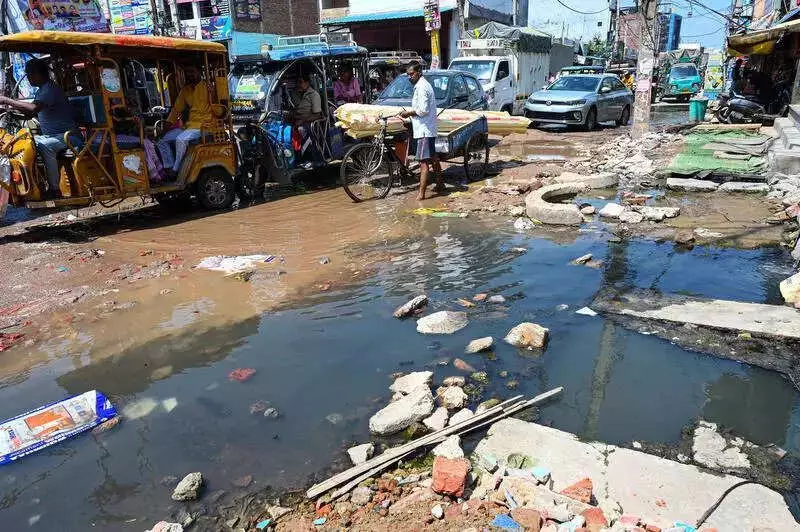
"Governments changed, but long-term planning was missing," Verma remarked, noting that identical visuals of flooded streets had appeared in media reports year after year without substantial improvement. He highlighted the systemic failure in urban planning that transcended political administrations.
However, the AAP offered a completely different perspective on the crisis. The party alleged that the recent severe waterlogging in Kirari was not a natural occurrence but rather the direct result of deliberate negligence by the current BJP government and associated agencies. AAP Delhi convener Saurabh Bharadwaj presented counter-allegations, claiming government agencies had systematically blocked natural drainage channels by dumping garbage on vacant Delhi Development Authority (DDA) land in the area.
"Rainwater from Sharma Colony and surrounding localities earlier used to drain smoothly through this land. This natural outlet has been blocked by dumping garbage, leading to severe waterlogging in Kirari," Bharadwaj alleged, characterizing the situation as "man-made flooding" orchestrated through administrative inaction.
Unheeded Warnings and Stalled Projects
The AAP leader further claimed that the party's MLA from Kirari had written dozens of letters over multiple years warning authorities that the drainage system required urgent repairs and maintenance. According to Bharadwaj, "no corrective step was taken" despite these repeated alerts, suggesting willful disregard for residents' welfare.
Minister Verma also addressed the stalled Kirari sewerage project, which was originally approved in December 2020 with a completion deadline of December 2024. The project remains significantly behind schedule, which Verma attributed to administrative failures and coordination breakdowns between departments. "The projects were sanctioned on paper, but execution was abandoned. Contractors stopped work due to non-payment," he revealed, highlighting systemic implementation problems.
Current Progress and Future Plans
Despite these challenges, Verma shared data indicating some recent improvements in Kirari's infrastructure. According to the minister, sewer line coverage in the constituency has increased from 70% (286 kilometers) to 84% (340 kilometers), representing measurable progress in expanding the drainage network. He noted that notable advancements had been made in localities including Pratap Vihar, Prem Nagar, and Bhagya Vihar sewage pumping stations.

The revised deadline for completing the comprehensive Kirari sewerage project is now June 2026, extending the timeline by approximately eighteen months from the original target. Verma cited audit observations that highlighted significant planning deficiencies, particularly regarding sewage treatment capacity. While sewage generation in Kirari amounts to approximately 36 million gallons per day (MGD), only a 15 MGD sewage treatment plant is currently operational, with a proposed 25 MGD facility still pending completion.
Integrated Approach and Major Investments
To address these systemic issues, Verma announced that an integrated approach is now being implemented across multiple government departments. The irrigation and flood control department will handle drain remodelling work, while the Public Works Department will execute related infrastructure projects to create a cohesive drainage solution.
Key projects in the pipeline include:
- A Rs 220-crore drain from Mundka halt to the supplementary drain
- A Rs 250-crore Kirari-Rithala trunk drain for major water diversion
- Comprehensive remodelling of the KSN and Rohtak Road drains
These substantial investments represent the government's commitment to developing permanent solutions rather than temporary fixes for Kirari's waterlogging challenges. The political battle over responsibility for the long-standing problem continues even as new plans are announced, with residents caught between competing narratives about who failed their constituency and who will finally deliver sustainable infrastructure improvements.