Political Reflections Illuminate Kolkata Literary Festival 2026 Session
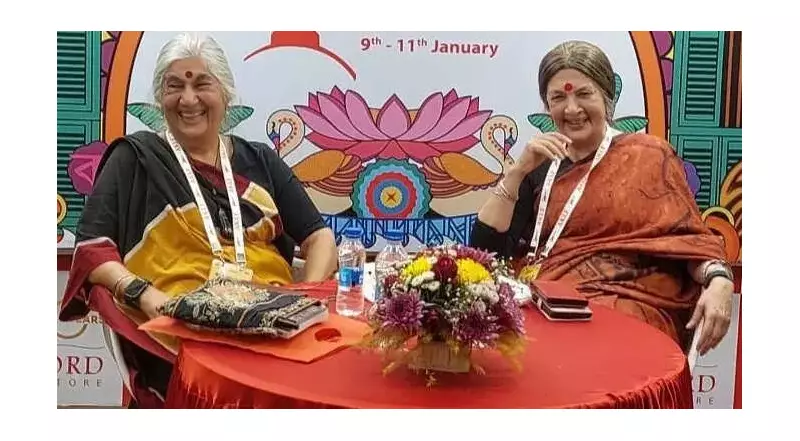
The Kolkata Literary Festival 2026 hosted a compelling session titled 'On Being Brinda' that resonated with political energy. Brinda Karat and Subhashini Ali engaged in a profound conversation about Karat's memoir, An Education for Rita: A Memoir, 1975–1985. Their dialogue explored the intricate connections between personal memory and political development during a pivotal decade in India's history.
Personal Journey Meets Political Commitment
Brinda Karat revisited her transformative move from Kolkata to Delhi during the discussion. She described working closely with textile workers in an unfamiliar linguistic and cultural environment. Karat framed this shift as a natural progression driven by deep commitment.
She recalled vivid moments from her early activism, including collecting funds on city streets while holding a red flag. This act generated concern within her family but also received their eventual support. Karat's narrative highlighted how personal choices intertwined with broader political movements during those formative years.

Challenging Assumptions About Working-Class Communities
A central theme emerged around the intellectual and moral capabilities of working-class communities. Karat spoke passionately about workers who demonstrated remarkable understanding of law, discipline, and solidarity. Their knowledge consistently challenged prevailing assumptions about education and ability.
She emphasized how structural inequality continues to suppress human potential across India. The conversation revealed how grassroots movements often cultivate sophisticated political consciousness despite limited formal education.
Feminist Movements in Historical Context
The dialogue situated India's feminist movements of the 1960s and 1970s within global resistance currents. Subhashini Ali reflected on the importance of sustained community engagement for political movements. She highlighted the cultural vitality that fuels meaningful social change.
Both speakers traced how feminist consciousness developed alongside other progressive movements during that era. They described how women's struggles intersected with broader class and social justice movements.
Audience Engagement Expands the Conversation
Audience questions broadened the discussion to encompass several key themes:
- Feminism's Foundations: Both speakers emphasized feminism's grounding in lived experience rather than abstract theory
- Political Courage: The conversation explored what sustains activists through challenging circumstances
- Memoir as Political Form: Participants discussed how personal narratives contribute to collective political memory
Karat and Ali underscored that feminism encompasses collective struggle, shared joy, and everyday resistance. They presented political engagement as a holistic experience that transforms both individuals and communities.
The session at Kolkata Literary Festival 2026 demonstrated how literary events can spark meaningful political dialogue. Personal memoirs like Karat's provide valuable insights into India's complex political history while inspiring contemporary conversations about justice and equality.