

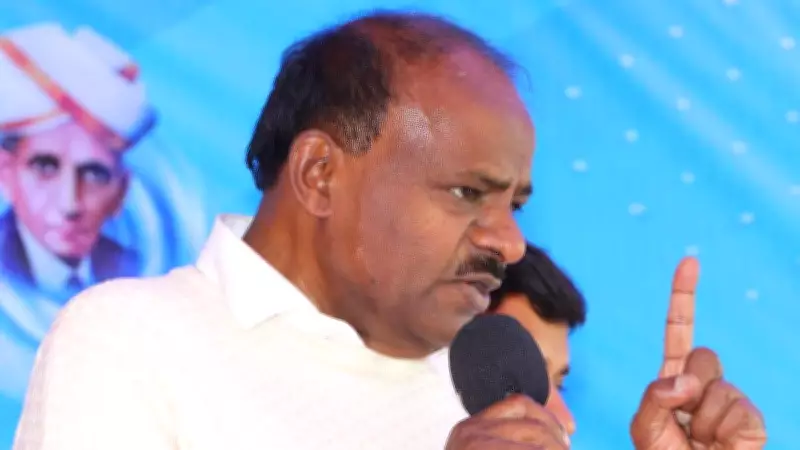
Kumaraswamy Challenges DMK's Authority on Southern States' Views
In a significant political statement, HD Kumaraswamy has asserted that the views expressed by the Dravida Munnetra Kazhagam (DMK) do not represent the collective opinion of the southern states of India. This declaration comes amid the DMK's strong opposition to recent legislative bills, with the party raising concerns that these measures could negatively impact the southern regions.
DMK's Stance on the Bills
The DMK, which holds power in Tamil Nadu, has been actively opposing the bills, arguing that they pose adverse effects on the interests of the southern states. The party has voiced apprehensions about potential economic and social repercussions, highlighting regional disparities that might be exacerbated by the proposed laws.
Kumaraswamy's Response: However, Kumaraswamy has countered this narrative, emphasizing that the DMK's position is not universally shared across the southern states. He pointed out that other states in the region may have differing perspectives or support for the bills, suggesting a need for a more nuanced and inclusive dialogue rather than a blanket opposition based on regional lines.

Political Implications and Broader Context
This disagreement underscores the complex dynamics within Indian federalism, where regional parties often champion state-specific issues while national policies aim for broader integration. Kumaraswamy's remarks could influence ongoing political debates, potentially shifting focus towards collaborative approaches that consider diverse viewpoints from all southern states.
Key Points:
- The DMK has been vocal in its criticism of the bills, citing risks to southern states.
- Kumaraswamy disputes this, stating the DMK does not speak for the entire region.
- The debate highlights tensions between regional and national interests in Indian politics.
As the discussion evolves, stakeholders are urged to engage in constructive conversations that balance regional concerns with national objectives, ensuring that policies are equitable and representative of all voices involved.






