

Ladakh Inquiry Commission Asserts Fairness Amid Growing Protests Over Report Delays
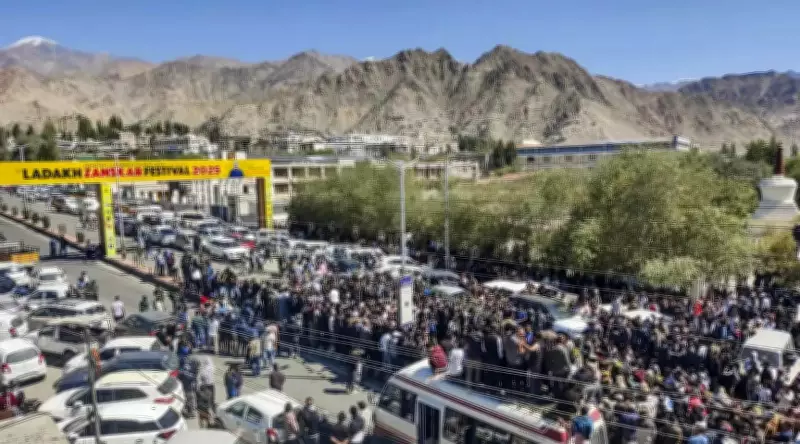
The judicial commission investigating the tragic Leh police firing that resulted in the deaths of four protesters has publicly defended its procedures, emphasizing that the inquiry is being conducted with fairness and transparency. This statement comes in direct response to mounting criticism from the Leh Apex Body (LAB), which has accused the commission of undue delays in submitting its findings and announced a protest rally in Ladakh.
Commission Details Progress and Methodology
At a press conference held in Leh, Rigzin Spalgon, the joint secretary of the commission, provided a detailed update on the investigation's progress. He revealed that a public notice had been issued, inviting individuals to submit affidavits to the panel. "In response, the commission has received and examined a large number of affidavits from members of the general public as well as from officials representing various departments of the administration," Spalgon stated.
He further elaborated on the timeline, noting that up to December 2025, a total of 22 witnesses from the administration had been examined. The inquiry work resumed in March 2026, and since then, 18 additional administrative witnesses have been examined. In addition, 45 public affidavits have been submitted to the commission.

Spalgon explained that the commission is currently focused on examining the affidavits submitted by the administration. "After the completion of this phase, we will proceed with the examination of witnesses from the public and civilian side, whose statements will be recorded as part of the ongoing judicial proceedings," he said. He strongly emphasized that the entire process is being carried out in a fair, transparent, and systematic manner to ensure a thorough investigation.
Leh Apex Body Announces Protest Rally Over Delays
The commission's statements were prompted by actions from the Leh Apex Body, which announced a rally in Ladakh scheduled for March 16. Addressing a separate press conference in Leh, LAB co-chairman Chering Dorjay Lakrook expressed frustration over the lack of progress in making the commission's findings public. "We had hoped the report would have been out by now, but there is no progress," Lakrook said, highlighting the group's concerns about delays in the judicial process.
The LAB has been vocal in its demands for statehood and Sixth Schedule status, which grants semi-autonomy, for Ladakh. The police firing on September 24, 2025, which killed four protesters advocating for these demands, has been a central point of contention. The union ministry of home affairs established the judicial commission in October last year to probe this incident, citing a "serious law and order situation" that led to police action and the fatalities.
Background of the Commission and Ongoing Talks
The commission is headed by former Supreme Court judge Justice B S Chauhan and was formed to examine the circumstances leading to the incident and the subsequent police action. Its establishment came after persistent demands from the LAB and the Kargil Democratic Alliance, Ladakh's two main political groupings. These groups had made the formation of the commission a precondition for resuming dialogue with the Centre.
Following the announcement of the commission, the Centre resumed talks with these groups in New Delhi on October 22, 2025. Another round of discussions between Ladakhi leaders and the home ministry's high-powered committee was held on February 4 this year. However, these talks ended without any significant breakthrough, further fueling tensions and the call for protests.
As the situation unfolds, the commission's assurance of a fair inquiry aims to address public concerns, while the LAB's planned rally underscores the ongoing political and social pressures in Ladakh over statehood and autonomy issues.






