

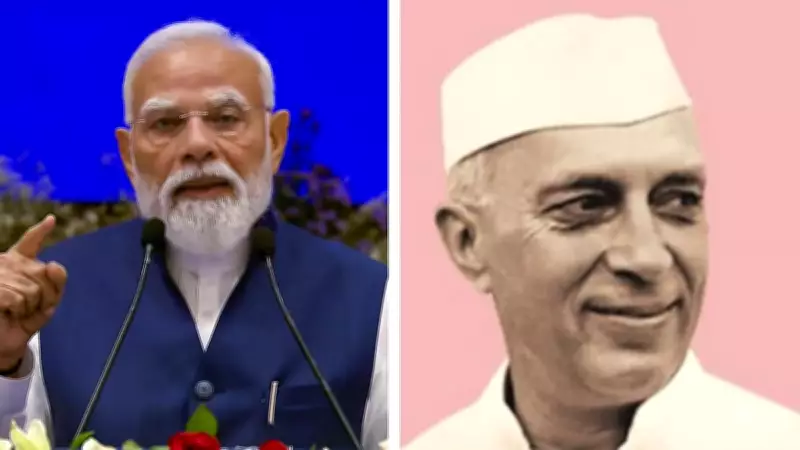
In a recent opinion piece, Bharat Bhushan draws a critical comparison between two iconic Indian leaders, Jawaharlal Nehru and Narendra Modi, focusing on their philosophical approaches to the state and the market. Bhushan argues that if Nehru placed excessive trust in the State to drive development and equity, Modi's failure lies in his unwavering faith in the market—not just for growth but also for equity, a goal that is fundamentally not in the market's DNA.
Nehru's State-Centric Vision
Jawaharlal Nehru, India's first Prime Minister, championed a socialist model where the state played a dominant role in the economy. He believed that government intervention was essential to reduce inequality and promote social justice. However, this approach often led to inefficiencies, bureaucratic red tape, and a lack of innovation, as the state became the primary driver of economic activity.
Modi's Market-Driven Approach
In contrast, Narendra Modi has embraced market-oriented reforms, emphasizing privatization, deregulation, and foreign investment. His government has sought to unleash the power of the private sector to accelerate growth. Yet, Bhushan contends that this strategy overlooks a fundamental flaw: markets are designed to maximize profits, not to ensure equitable distribution of resources. As a result, while India has seen impressive GDP growth under Modi, income inequality has widened, and the benefits have not reached the poorest segments of society.

The Core Argument
Bhushan's central thesis is that longevity in office does not automatically translate into a lasting legacy. He suggests that both Nehru and Modi, despite their differing ideologies, share a common pitfall: an over-reliance on a single mechanism—whether the state or the market—to achieve comprehensive development. True legacy, he implies, requires a balanced approach that leverages the strengths of both while mitigating their weaknesses.
Implications for India's Future
The article calls for a rethinking of economic policy, urging leaders to recognize that markets are tools for efficiency and growth, but not for equity. Without deliberate state intervention to redistribute wealth and provide social safety nets, the gap between the rich and the poor will continue to widen. Bhushan warns that if Modi's market-centric model fails to address inequality, his legacy may be tarnished despite his longevity in power.
As India navigates its path forward, this critique serves as a reminder that sustainable development requires a nuanced blend of state and market forces, tailored to the country’s unique challenges and aspirations.






